Male Enhancement Q&As- 50th Edition

Commonly asked male enhancement questions and answers

Courtesy of EpicExtender:

Q. I’ve just gotten started with my training and want to make sure I’m not overdoing anything.

What’s the best way to tell if I’m using the right level of pressure with my 3 in 1 pump?


A: For the 3-in-1 Water/Air Pump, we suggest starting with no more than 10 to 17 kPa. If you require a routine for more guidance, please see: How to get started pumping.

A good rule of thumb to use with ANY new exercise or practice: Err on the side of caution with force and duration. The first few sessions with a new method of training should be given over to mastering the form (and wear, if necessary). From there, time and pressure can be adjusted to a proper baseline.

Under no circumstances should bruising, excess soreness, or anything beyond a mild level of discomfort be considered for male enhancement training progress.


Q. You mention different types of sleeves which need to be used for wearing the EPIC Extender. Where can I purchase these sleeves?

A: For proper fitting and comfort, you’ll need to use sleeves to secure your Vacuum Chamber cups for the extender. Please check out the following: Epic Sleeves v1.


Q: I understand that warming up is important for preventing injuries and maximizing training results, but I don’t have access to a hot tub. The heating pad I use for my back is too bulky, and I travel frequently. What would you recommend for warming up?

A: We created the RED LIGHT THERAPY PAD specifically for warming the penis. It’s effective for warming up (and warming DOWN), warming during training, and even post-training if you wish to keep the tissues expanded and blood flowing.

Please check out the details here: RED LIGHT THERAPY PAD.

Essential Training Products for Your Enhancement Journey- Starting Your Training Right

3-in-1 Water/Air Pump: Perfect for beginners! Start safely with our recommended 10-17 kPa pressure range. This versatile pump gives you the control you need to build your routine gradually while mastering proper form. Remember: it’s always better to start conservative and progress steadily than to risk injury by overdoing it.

Comfort & Fit Essentials

Epic Sleeves: Required for proper EPIC Extender use! These specialized sleeves ensure secure, comfortable fitting with your Vacuum Chamber. Don’t let discomfort derail your training progress—proper sleeves make all the difference between a session you’ll stick with and one you’ll dread.

Maximize Results & Prevent Injury

RED LIGHT THERAPY PAD: The ultimate warm-up solution for serious trainers! Whether you’re at home or traveling, this compact therapy pad delivers:

  • ✓ Effective pre-training warm-up
  • ✓ Active warming during your session
  • ✓ Post-training recovery support
  • ✓ Enhanced blood flow and tissue expansion
  • ✓ Perfect for travelers—no bulky heating pads needed!

Warming up isn’t optional—it’s essential for injury prevention and maximum gains. This pad makes it convenient every single time.

Please check out the following for a great selection of discount male enhancement products!

 EpicExtender

PUMPING SAFETY TIPS

Penile vacuum therapy, commonly referred to as “pumping,” is a method that involves using a device to create a vacuum around the penis, drawing blood into the organ and resulting in an erection. While effective for various purposes, including treating erectile dysfunction and enhancing size, it’s crucial to use the device safely to prevent potential injuries.

1. Choose the Right Type of Pump

Different types of penis pumps exist, such as air pumps and hydropumps. While air pumps use air to create the vacuum, they can sometimes cause the penis to bend, bruise, or blister. On the other hand, hydropumps use water, providing a safer experience as the warm water acts as a cushion during the pumping process.

2. Don’t Overpump

While it’s tempting to see immediate extreme outcomes, it’s essential to be patient and aim for long-term results. For pumps with gauges, it’s recommended the first session be at 3-5 Inches Hg maximum. Overpumping can lead to issues like a donut effect, blisters on the glans, petechiae, or other skin injuries, which can delay progress.

| Also read: The Eternal Debate: Pumping vs. Clamping for Penis Enlargement

3. Protect the Testicles

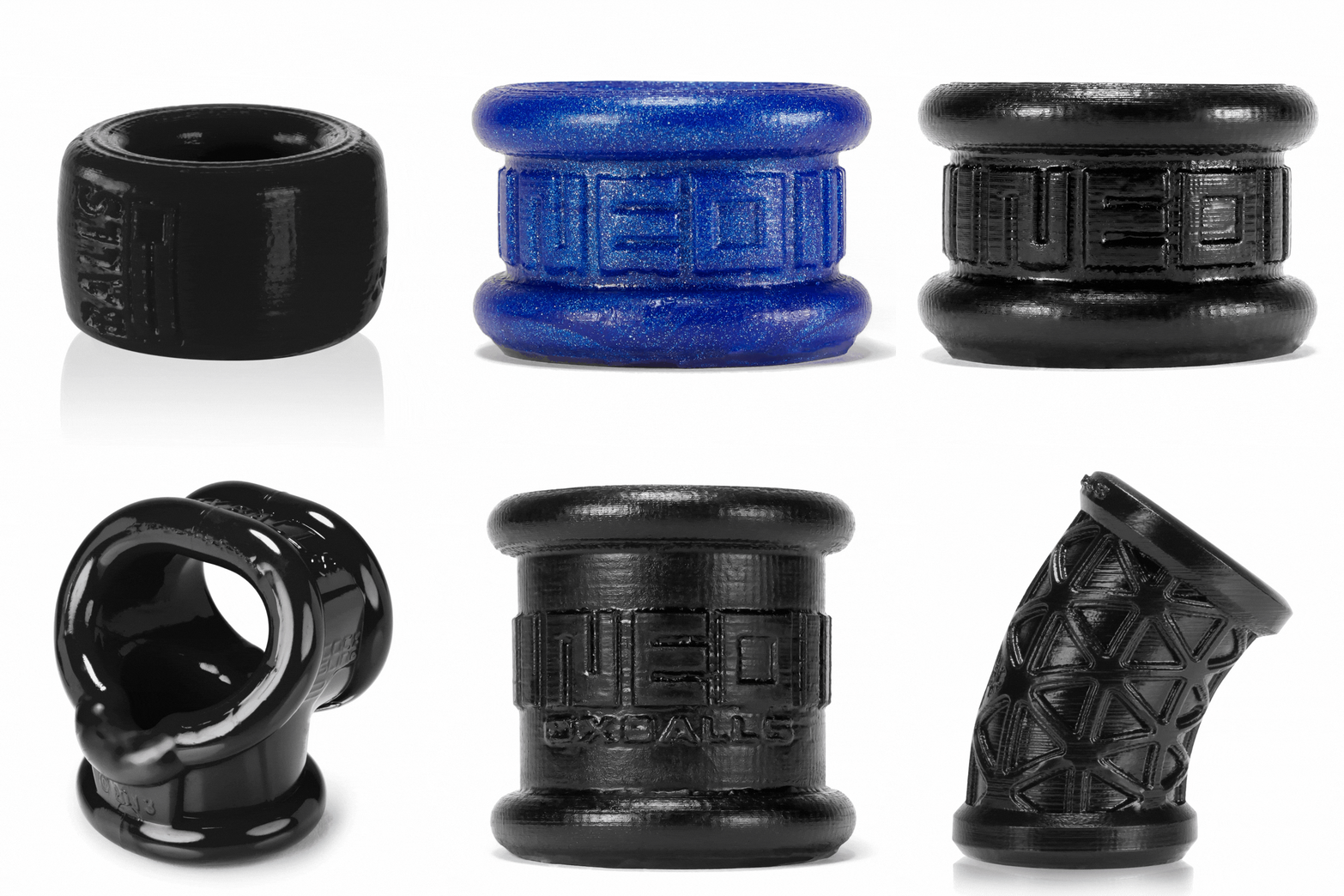
Sometimes, the pump can inadvertently suck in the testes. Using a ball stretcher can help prevent this from happening.

Ball Stretchers JELQ2GROW

4. Safety First

Ensure that the pump you’re using is of high quality. Counterfeit or low-quality pumps can lead to poor results and potential injuries. Always read the manufacturer’s instructions before use, ensure you have the correct size of the pump, and avoid using it under the influence of alcohol or drugs.

5. Be Aware of Skin Changes

Monitor your skin for any changes. If you notice bruising, redness, or blistering, stop using the pump. Small red dots indicate bleeding under the skin, and any numbness, discomfort, or pain is a sign of ceasing usage.

J2G ACADEMY

Interested in Jelqing, Stretching, or ULI’s? Join JELQ2GROW Academy for FREE today!

6. Hygiene Matters

Maintain hygiene by cleaning your pump with a specialized cleaning solution after every use to prevent bacterial buildup and potential infections.

7. Use JELQ2GROW’s Jelqing Balm

JELQ2GROW’s Jelqing Balm is designed to help men reconnect with their intimate parts and provide proper care for the delicate skin of the penis. The balm contains Shea Butter, Beeswax, and Tea Tree Oil, offering numerous skincare benefits:

JELQ2GROW Balm Penis Enlargement

– Moisturizing: Shea Butter’s fatty acid content provides hydration, locking in moisture and reducing the risk of dryness.

– Smoothness: Enhanced hydration improves skin recovery, leading to softer and healthier-looking skin.

– Nutritive: The balm is rich in vitamins A, E, and F, promoting strong antioxidant activity and protecting skin cells.

– Healing & Repair: Shea butter and Beeswax help reduce the appearance of stretch marks and scarring.

– Anti-inflammatory: Tea Tree Oil, with its high concentration of terpinen-4-ol, along with Shea butter, reduces inflammation.

Using the Jelqing Balm post-pumping can prevent injuries, boost recovery in case of irritation, and enhance the overall jelqing experience.

Penis Pumping: Maintenance for Long-Term Results

If you suddenly interrupt your training, pumping results won’t stick forever, a maintenance routine will help sustain the gains. Consider pumping every 7-10 days or twice a week. If you stop all forms of training, some of your gains might regress, but not all.

By adhering to these safety tips and incorporating quality products like JELQ2GROW’s Jelqing Balm, you can ensure a safe and effective pumping session. Always prioritize your health and well-being, and consult with a healthcare professional if you have any concerns.

BathPump.com Has A New Look! Order your Hydromax 7 Penis Pump Here

Bathpump.com has a new look!  After some downtime due to global shipping service breakdowns, Bathpump is BACK with a new look and more streamlined processing for faster deliveries!


Premiering on the site is the Bathmate Hydromax 7 Penis Pump. The Bathmate Hydromax 7 is an advanced hydro pump designed for men with erect penis sizes ranging from 5 to 7 inches (with room to grow at 9 inches max). It utilizes bellows pump and valve technology to provide 35% more power, enabling greater gains in size and improved sexual performance. It’s the most popular model of Bathmate devices and can serve the needs of 90% of men for all stages of training.


Visit BathPump Store today!


If you’d like to order a different size or model or are interested in ordering other Bathmate products, please contact us.

Bathmate-Hydromax-7-Clear4 copy


Pumping The Entire Package: Ask The Experts

Pumping The Entire Package: Ask The Experts

Big Al, of MaleEnhancementCoach.com, answers questions about using a Penis Enlargement Vacuum Device to pump both penis and testes.

If you have questions you’d like answered in an Ask the Experts article, please PM Big Al


Q. What do you think of using a big diameter cylinder to pump both the penis and the testes? This seems to be a better fit and doesn’t cause a lot of the problems just pumping the penis does.

Al: There are advantages and disadvantages to pumping testes

Here are some of the advantages:

Lower hanging testes

Surrounding [basal] tissues also stretched lower hanging testes

Less issues with fitting; trimming shaving may not be necessary

Some disadvantages:

Possible varicocele aggravation (if varicocele is present)

Potential Cremaster muscle(s) strain

Lower hanging testes- this is listed in both categories, because while the initial effect of lower hanging testes makes them appear larger and more virile, they will tend to hang lower as men age. The drawback comes from overdoing this to the point to where the elongation becomes excessive over time.

There’s also the temporarily enlarged appearance due to edematous swelling; though whether this is an advantage or disadvantage is pure personal preference.

For a great selection of pump based devices, please see Dr. Joel Kaplan

*                *                *

Do you want Al to answer your questions?  Please check out MaleEnhancementCoach.com

Bagman’s Advanced Pumping Techniques: Effective Time

penis pumping dos and donts

Bagman’s Advanced Pumping Techniques: Effective Time

From The Bagman at PumpToys.com

Recommended by Dr. Howard of MyPenisDoctor.com

TIME AND THE PUMPING PROCESS
Many pumpers feel that they grow fast in the early part of a pump session, then seem to “Plateau” or reach a point where enlargement either stops or greatly slows down. It would seem logical to say that the longer you pump, the larger you would get. 
Not necessarily true!

The question is one of effective time. “Effective” means any time when the flow and gain of fluids that cause enlargement is taking place at the desired rate, and that is not something that occurs continually. Effective time also varies in the level of efficiency- as the flow reduces, the level drops. Pumping up faster or larger is a factor of effective time only. Time spent in the pump that’s not effective is totally wasted.

This fluid flow and gain process that creates enlargement is restricted by the pumping operation itself, in these three ways:

  • As swelling takes place, tissues are engorged- including those of the passageways bringing fluid in, actually reducing the diameters of those passageways. 
  • There is a pinching pressure attempting to close these passageways right at the point where the cylinder entry meets your body. The passageways are part of the tissue being compressed by the sealing surface of the tube.
  • It is further complicated by another easily demonstrated process, that of “vacuum collapse”. Take a soft tube, and connect it to your vac pump. With an open end, it will suck indefinitely. Now squeeze the tube down in the middle. As the opening gets narrower, two things happen. One, the flow through the restriction reduces- and two, the vac level on the restricted portion increases. There comes a point where the internal vacuum itself pulls the tube closed- and all flow stops.

All of these conditions combine to either restrict or stop the process of enlargement. The longer the condition lasts, the tighter the restriction can get- and thereby further reducing the level of effectiveness, ultimately ending effective time altogether. The issue is one of making all the time in the pump effective time, and maximizing the level of that effectiveness.

HOW DO YOU FIND OUT WHAT WORKS?

We did an experiment to try and measure the extent of this. To determine exactly what gain was occurring, we went to Displacement Pumping. (Explained in another Advanced Pumping Article) Two pumpers who run close to the same in size and usual enlargement rate provided the comparisons. We selected the one that usually pumped up faster as the control subject; and the slower one as the test subject. Both used STJ’s as cylinders, and both pumped wet with precisely the same level of water in the jar. Both jars were marked for measurement by adding water that had been precisely measured and creating a CC (Cubic Centimeter) scale on the side The scale started with the zero set at the water mark with the jar vertical and inverted, with enough water to cover the pumper. As the enlargement develops, it displaces water and raises the level on the scale- precisely measuring the volume of change. We did this experiment on four occasions using different schedules each time, with substantially different results.

The control subject would pump at a vac level of 5″, and hold it for 60 minutes.

The test subject would pump at the same vac level, but would interrupt the session with an alternate state as called for by the experiment schedule.

The result is measured in relative terms:
The change in volume (actual gain) of the test subject, as compared to the control subject expressed as a plus or minus percentage. The volume of the control subject’s gain over the zero mark would always be 100. If the test subject developed 10% less gain, the test score would be 90%. If the gain was identical, the score would be 100%; if the gain was 10% more, the score would be 110%. The “Relative effectiveness” is the score points gained per minute; obtained by dividing the score by the time at level.

Four test schedules were tried, as follows:

  1. Break at 15 minute intervals, exit and massage 2 minutes, return to vac level. (3 breaks)
  2. Reduce vac level to zero once every 15 minutes, hold zero for 1 minute, return to level.
  3. Reduce vac to zero every once every 10 minutes, hold zero for 1 minute, return to level.
  4. Reduce vac to 1″ every 5 minutes, hold for 30 seconds, return to level.

Here’s the scorecard of the test subject for these tests:

SCHEDULE  SCORE  TIME @ LEVEL  RELATIVE EFFECTIVENESS 
CONTROL  100  60 MINUTES  1.66 
#1  108  54 MINUTES  2.00 
# 2  111  57 MINUTES  194 
# 3  121  54 MINUTES  2.24 
# 4  133  54 MINUTES  2.46 

SO-WHAT DOES IT MEAN?
In every schedule, taking breaks to restore circulation and relieve the closure resulted in fast
Bagman’s Advanced Pumping Techniques: Effective Time

From The Bagman at PumpToys.com

TIME AND THE PUMPING PROCESS

Many pumpers feel that they grow fast in the early part of a pump session, then seem to “Plateau” or reach a point where enlargement either stops or greatly slows down. It would seem logical to say that the longer you pump, the larger you would get. Not necessarily true!

The question is one of effective time. “Effective” means any time when the flow and gain of fluids that cause enlargement is taking place at the desired rate, and that is not something that occurs continually. Effective time also varies in the level of efficiency- as the flow reduces, the level drops. Pumping up faster or larger is a factor of effective time only. Time spent in the pump that’s not effective is totally wasted.

This fluid flow and gain process that creates enlargement is restricted by the pumping operation itself, in these three ways:

  • As swelling takes place, tissues are engorged- including those of the passageways bringing fluid in, actually reducing the diameters of those passageways. 
  • There is a pinching pressure attempting to close these passageways right at the point where the cylinder entry meets your body. The passageways are part of the tissue being compressed by the sealing surface of the tube.
  • It is further complicated by another easily demonstrated process, that of “vacuum collapse”. Take a soft tube, and connect it to your vac pump. With an open end, it will suck indefinitely. Now squeeze the tube down in the middle. As the opening gets narrower, two things happen. One, the flow through the restriction reduces- and two, the vac level on the restricted portion increases. There comes a point where the internal vacuum itself pulls the tube closed- and all flow stops.

All of these conditions combine to either restrict or stop the process of enlargement. The longer the condition lasts, the tighter the restriction can get- and thereby further reducing the level of effectiveness, ultimately ending effective time altogether. The issue is one of making all the time in the pump effective time, and maximizing the level of that effectiveness.

HOW DO YOU FIND OUT WHAT WORKS?

We did an experiment to try and measure the extent of this. To determine exactly what gain was occurring, we went to Displacement Pumping. (Explained in another Advanced Pumping Article) Two pumpers who run close to the same in size and usual enlargement rate provided the comparisons. We selected the one that usually pumped up faster as the control subject; and the slower one as the test subject. Both used STJ’s as cylinders, and both pumped wet with precisely the same level of water in the jar. Both jars were marked for measurement by adding water that had been precisely measured and creating a CC (Cubic Centimeter) scale on the side The scale started with the zero set at the water mark with the jar vertical and inverted, with enough water to cover the pumper. As the enlargement develops, it displaces water and raises the level on the scale- precisely measuring the volume of change. We did this experiment on four occasions using different schedules each time, with substantially different results.

The control subject would pump at a vac level of 5″, and hold it for 60 minutes.

The test subject would pump at the same vac level, but would interrupt the session with an alternate state as called for by the experiment schedule.

The result is measured in relative terms:
The change in volume (actual gain) of the test subject, as compared to the control subject expressed as a plus or minus percentage. The volume of the control subject’s gain over the zero mark would always be 100. If the test subject developed 10% less gain, the test score would be 90%. If the gain was identical, the score would be 100%; if the gain was 10% more, the score would be 110%. The “Relative effectiveness” is the score points gained per minute; obtained by dividing the score by the time at level.

Four test schedules were tried, as follows:

  1. Break at 15 minute intervals, exit and massage 2 minutes, return to vac level. (3 breaks)
  2. Reduce vac level to zero once every 15 minutes, hold zero for 1 minute, return to level.
  3. Reduce vac to zero every once every 10 minutes, hold zero for 1 minute, return to level.
  4. Reduce vac to 1″ every 5 minutes, hold for 30 seconds, return to level.

Here’s the scorecard of the test subject for these tests:

SCHEDULE  SCORE  TIME @ LEVEL  RELATIVE EFFECTIVENESS 
CONTROL  100  60 MINUTES  1.66 
#1  108  54 MINUTES  2.00 
# 2  111  57 MINUTES  194 
# 3  121  54 MINUTES  2.24 
# 4  133  54 MINUTES  2.46 


SO-WHAT DOES IT MEAN?

In every schedule, taking breaks to restore circulation and relieve the closure resulted in faster net gain. Frequent reliefs of vacuum for short intervals are the most effective overall. The indication is that a sort of pulse-pumping with intervals is far more effective than constant pressure. It’s also logical to conclude that if the test had run for a two-hour period, the second hour score increases would have been greater than the first, because the loss of effectiveness in the control subject would be somewhat accumulative or progressive.

One other note- the subjects were sitting and not active during the tests. Activity would help relieve some of the restriction problems. It’s commonly recognized that being erect while in cylinder is more effective than a sitting position. This is due to the weight of the cylinder pulling downward, helping to reduce the pressure the vacuum can exert against the body in the seal area, thereby creating less restriction to fluid flow.

If you feel you have reached your “plateau”, try the take-a-break system; get your fluid passages open again, and- pump on!


How Common Is Erectile Dysfunction?

How Common Is Erectile Dysfunction?

By Katie Wilkinson, MPH, MCHES

Published on September 28, 2021
Medically reviewed by Matthew Wosnitzer, MD

This article is a repost which originally appeared on verywell health

Edited for content.

Erectile dysfunction (ED), or impotence, is the inability to achieve and maintain an erection for sexual activity. While the occasional failure to get an erection is not uncommon, if it happens consistently, or more than 50% of the time, it may be ED. It can be a temporary experience, or develop into a long-term condition that requires treatment.

Prevalence

On a global scale, ED affects 3% to 76.5% of all men. The wide range is due to the different measures used in studies to evaluate ED.

In the United States, it’s estimated that 30 million men experience ED.2 Worldwide, there are about 150 million men living with ED, and by the year 2025, it’s predicted that over 300 million men will have ED.

Common Causes

ED can be caused by a number of factors relating to physical and mental health, including:

  • Physical and health conditions that involve different systems in the body, such as the vascular, neurological, or endocrine systems; can include issues with nerve signals or blood flow to the penis
  • Side effects from medication, which can include antidepressants, medication to manage blood pressure, tranquilizers, sedatives, ulcer medication, and prostate cancer therapy
  • Psychological or emotional causes such as depression, anxiety, fear associated with sexual performance, general stress, or low self-esteem
  • Lifestyle behaviors and health-related factors that are associated with ED include smoking, being overweight, lack of exercise, and substance (alcohol or drug) use

Risk Factors

Certain risk factors have been found to increase the likelihood of experiencing ED. They can include:

    • Age: The chances of developing ED increases with age, particularly in men over 60 years old.
    • Tobacco use: Research has found that smokers are 1.5 times more likely to experience ED than nonsmokers.
    • High blood pressure (hypertension): About 30% to 50% of people living with hypertension also experience ED.
    • Type 2 diabetes: Between 35% and 90% of diabetic men will develop ED.
    • High cholesterol: Statins used to treat high cholesterol showed improved erectile function.
    • Hypogonadism: This is a condition where the body doesn’t produce enough sex hormones, including testosterone. Since testosterone is necessary for the ability to maintain an erection, people with hypogonadism who are treated with testosterone replacement therapy can see improved erectile function.
    • Obesity: Several studies have indicated that men with a body mass index (BMI) greater than 25 begin to experience a 1.5 to three times greater risk of ED than those with lower BMIs.
    • Depression: Men living with depression are two times more likely to experience ED. Treating depression with selective serotonin uptake inhibitors (SSRIs) can also increase risk of ED.

Stress and anxiety, particularly performance-related anxiety, can also cause issues with sexual activity and erectile function.

Associated Conditions

In addition to diabetes, hypertension, and hypogonadism, the National Institute for Diabetes and Digestive and Kidney Diseases also lists the following conditions and diseases as associated with ED:

  • Heart and blood vessel conditions, including atherosclerosis
  • Injuries of the spinal cord, penis, prostate gland, bladder, or pelvic area
  • Prostate or bladder surgery
  • Chronic kidney disease
  • Multiple sclerosis
  • Peyronie’s disease, a condition where scar tissue develops and creates a bend in the penis

Treatment

Treatment for ED can take many forms and depends on the root cause of the individual’s ED. Because of ED’s impact on sexual relationships, it’s worth discussing treatment options with your sexual partner.

Lifestyle

Avoiding or stopping the use of tobacco, alcohol, and other drugs may help with ED.

Increasing physical activity and maintaining a healthy weight can also be a way to improve erectile function.

Mental Health Counseling

Because emotional and psychological concerns can play a role in ED, speaking with a mental health professional can be beneficial. They can help identify ways to manage anxiety and work through stress that may be impacting sexual performance.

Medication

Oral (PDE5 inhibitors), injectable, or suppository medications can be prescribed to help achieve and maintain an erection. For those with low testosterone (hypogonadism), testosterone replacement therapy may be prescribed.

Treatment may also involve adjusting or changing current medications that hinder the ability to get an erection.

Devices and Procedures

The following devices and procedures can be used to treat ED:

  • Penis pump: This device uses vacuum action to pull blood into the penis to create an erection. It has a tube where the penis is placed and a pump that draws air out of the tube and creates suction. Once the blood is pulled into the penis, an elastic band is placed at the base of the penis to prevent the blood from going back into the body and to keep the erection for about 30 minutes.
  • Arterial repair surgery: Procedures to repair clogged blood vessels in the penis may increase blood flow to allow for erections. This treatment is usually reserved for patients under the age of 30.
  • Implantable devices: These include surgically placed devices that either inflate or include semi-rigid rods to help a person achieve an erection.

A Word From Verywell

While many men might feel embarrassed by their erectile dysfunction, it should be a comfort to know that it is a very common condition, affecting at least 150 million men worldwide. It is also a very treatable condition.

Talk to your healthcare provider if you experience issues achieving and maintaining an erection. Even though it may be uncomfortable to talk about, proper sexual functioning is a key part of your overall health and well-being.

Verywell Health uses only high-quality sources, including peer-reviewed studies, to support the facts within our articles. Read our editorial process to learn more about how we fact-check and keep our content accurate, reliable, and trustworthy.
  1. Cleveland Clinic. Erectile dysfunction. Updated October 14, 2019.
  2. National Institute of Diabetes and Digestive and Kidney Diseases. Definition & facts for erectile dysfunction. Updated July 2017.
  3. Kessler A, Sollie S, Challacombe B, Briggs K, Van Hemelrijck M. The global prevalence of erectile dysfunction: a review. BJU International. 2019;124(4):587-599. doi:10.1111/bju.14813
  4. Kalsi J, Muneer A. Erectile dysfunction – an update of current practice and future strategies. J Clinic Urol. 2013;6(4):210-219. doi:10.1177/2051415813491862
  5. National Institute of Diabetes and Digestive and Kidney Diseases. Symptoms & causes of erectile dysfunction. Updated July 2017.
  6. DeLay KJ, Haney N, Hellstrom WJ. Modifying risk factors in the management of erectile dysfunction: a review. World J Mens Health. 2016;34(2):89-100. doi:10.5534/wjmh.2016.34.2.89
  7. Mourikis I, Antoniou M, Matsouka E, et al. Anxiety and depression among Greek men with primary erectile dysfunction and premature ejaculation. Ann Gen Psychiatry. 2015;14(1):34. doi:10.1186/s12991-015-0074-y
  8. National Institute of Diabetes and Digestive and Kidney Diseases. Treatment for erectile dysfunction. Updated July 2017.
  9. Urology Care Foundation. What is erectile dysfunction? Updated June 2018.
  10. Nguyen HM, Gabrielson AT, Hellstrom WJG. Erectile dysfunction in young men—a review of the prevalence and risk factors. Sexual Medicine Reviews. 2017;5(4):508-520. doi:10.1016/j.sxmr.2017.05.004
  11. International Society for Sexual Medicine. Can a vasectomy cause erectile dysfunction (ED)?
  12. Ssentongo AE, Kwon EG, Zhou S, Ssentongo P, Soybel DI. Pain and dysfunction with sexual activity after inguinal hernia repair: systematic review and meta-analysis. J Am Coll Surg. 2020;230(2). doi:10.1016/j.jamcollsurg.2019.10.010

Is an Electric Penis Pump worth it?

Is an Electric Penis Pump worth it?

We’ve partnered with TotalMan and will be presenting regular video features from this comprehensive site!

In this video, TotalMan discusses electric penis pumps.

In this video I take you through a quick unboxing of an electric penis pump.

I also give you a quick review and comparison to how it stands up next to the Hydromax Hydro Penis Pump and a Dry Penis Pump such as LA Pumps.

Taking you through some pros, cons and a few things to think about if you ever want to consider going for something like an electric penis pump.

The last thing I want is for you to get something that seems like a great idea however falls very short on function, comfort and results.

Enjoy.

VIDEO COMING SOON

Visit TOTALMAN SHOP for ALL of YOUR Male Enhancement needs!