Young, Single, Not Ready to Mingle: Relationships, Mental Health, ED

A study ties depression, anxiety and lack of a partner to erectile dysfunction in younger men.

Author: James Anderson
Published: February 20, 2023

This article is a repost which originally appeared on Giddy

Edited for content. The opinions expressed in this article may not reflect the opinions of this site’s editors, staff or members.

Key Points

‧ The quality of a relationship will have an impact on sexual performance.

‧ Anxiety can lead to low libido and ED.

‧ Problems arise when anxiety medication side effects add to sexual performance issues.

A single man in his late 20s occasionally dates but hasn’t been on a date in some time. He has sex infrequently. That’s been the case for a few years, maybe about a decade.

He has developed depression and anxiety. He has struggled with those mental health issues for a while, and now he has problems getting erections. When he does get hard, his penis doesn’t remain that way for long, certainly not long enough to enjoy penetrative intercourse.

He’s been saying to himself, “Man, I’ve been single for so long. I feel broken because of my mental health issues, and now I can’t even get it up or keep it up. Nobody is going to want to be with me.”

Any young guy experiencing mental health issues and erectile dysfunction (ED) should know there’s hope. Their situation is not as dire as it might seem, according to Ravi Hariprasad, M.D., M.P.H., a psychiatrist with Intuitive Psychiatry in San Francisco.

“His first step was recognizing the problem and seeking help and taking the steps required to make the situation better,” Hariprasad said about the hypothetical young man.

Relatively young single men who suffer from both a chronic mental health condition, such as anxiety or depression, and ED are not alone, contrary to what they might fear. There’s not only hope for them, but also help and coping strategies available.

Risk factors for depression, anxiety and ED

Authors of a study first published in 2020 in the Journal of Urology found an association between relationship status, mental health and ED. The mental health and ED link appeared common among a sample of 2,660 sexually active men between 18 and 31 years of age. About 14 percent reported some form of ED. Anxiety and tranquilizer use were associated with greater odds of moderate-to-severe ED; antidepressant use was associated with more than three times the odds of moderate-to-severe ED. Married men and those with partners were 65 percent less likely than single guys to experience it in moderate-to-severe form.

“This information may not necessarily function the same way when reversed and used as a predictive model of whether a young single man may be at risk of having or developing ED of any severity,” according to Joshua Poole, M.D., a psychiatrist in California who works with Open Mind Health, a virtual mental wellness network. “It more so tells us that those surveyed who were already partnered were less likely to have moderate to severe ED.”

We don’t yet have definitive data clarifying just how relationship status, mental health and sexual dysfunction relate to each other, however, Poole said.

“Clinically, I have witnessed that the quality of the relationship frequently has more to do with sexual dysfunction than the presence or absence of a relationship,” he explained. “There are many instances where a relationship can be the source of both mental health issues and sexual dysfunction. In speaking to therapists who specialize in sex therapy, I have often been told that a great deal of sexual dysfunction is actually the result of emotional dysfunction in the dynamic of a relationship.”

For young men, the major risk factors for developing anxiety and depression include genetics, stress, and drug and alcohol problems, said Eric Yarbrough, M.D., a psychiatrist based in New York City. Like Poole, though, he doesn’t consider the relationship between partner status and mental health clear-cut.

“Some people have relationships which are healthy and supportive,” he said. “Others might have relationships which cause them stress and do more harm than good. There are reasons to be single and reasons to be in a relationship, but they are highly individual and relative.”

Nevertheless, several factors might account for the association observed in the study.

Ways mental health interferes with sexual health

Anxiety and depression can both lead to low libido, ejaculatory dysfunction and ED, Poole explained.

Those mental health conditions, Hariprasad suggested, can keep someone from being present and can interfere with their ability to focus when trying to have sex.

“This can make it more difficult for men to achieve and maintain an erection, leading to erectile dysfunction,” he said in an email. “Additionally, single men may be more likely to be in sexual relationships with less familiar partners, which can lead to increased feelings of anxiety, further exacerbating erectile dysfunction.”

There’s nothing mysterious regarding the comparatively lower prevalence of sexual dysfunction among men in emotionally supportive, multidimensional and close partnerships vis-à-vis young single men, Hariprasad said.

“I’ve seen over these years of our Tinder culture—our hookup culture—people are losing these other dimensions of friendship and intimacy in relationships, and that’s leading to some of this difficulty,” he said in reference to struggling single men. “Contrary to what the media says, the novelty of having sex with a partner you don’t know is not universally arousing. It can be terrifying to some, and it can activate feelings of insecurity and anxiety in others, none of which are very sexy.”

In contrast, as Hariprasad stressed, arousal can emerge from intimacy.

Conversely, frequent masturbation and excess ejaculation can exacerbate the cycle of mental health issues contributing to relationship difficulties and vice versa, he said, adding that porn consumption often gets paired with incessant masturbation, and that can cause another vicious cycle. Watching a lot of porn can desensitize someone to the amount of stimulus needed for arousal, which could result in ED, Hariprasad explained.

“Often, people are not watching the entire clip,” he said. “They’re just fast-forwarding to the components that are highly arousing, and that’s leading to an inappropriate mental patterning of the sexual response cycle that’s not often conducive to a normal sexual response cycle with a partner.”

Therapy and coping strategies

So what can the young, single guy dealing with ED as well as anxiety and/or depression do to address his problems?

Yarbrough would advise the man to prioritize treating his anxiety and depression since the conditions can affect myriad facets of life, from work to family to friendships to romance. He should also see a primary care physician to rule out any potential health problems that could be causing the mental health difficulties.

“After all of this, a person can explore their sexual history and views on sex to understand how they might be affecting his ability to maintain an erection,” he said.

Poole cautioned that the gold standard for treating both anxiety and depression has a reputation for contributing to sexual dysfunction. These are typically antidepressants derived from the family of medications that includes selective serotonin reuptake inhibitors (SSRIs) and serotonin and norepinephrine reuptake inhibitors (SNRIs).

“It’s a tricky thing when the treatment for a problem can also cause the problem,” he acknowledged.

If ED results as a side effect of antidepressant medication, Poole recommended decreasing the dose or switching to a medication that doesn’t worsen the patient’s mood disorder.

Nonpharmaceutical strategies, including practicing breathing techniques to help in the moment and writing a journal to identify and alter spiraling negative thoughts, can help some people cope with anxiety and depression.

Certain physical activities, done regularly, have been shown to be potentially helpful, such as the following:

‧ Practice stress-management techniques, such as meditation and yoga
‧ Engage in mindful movements like tai chi
‧ Adopt a proper sleep schedule
‧ Avoid excess caffeine
‧ Eat a balanced diet

CBD oil might be a mild therapeutic option for some folks struggling with anxiety and depression. Assistance from professionals in the form of cognitive behavioral therapy (CBT) can be a talk therapy tool worth exploring to pinpoint triggers and manage symptoms.

A new lens for sexual behavior

Hariprasad affirmed talk therapy and lifestyle changes as treatment possibilities.

“Then, in parallel, we’d need to change your sexual behaviors and hygiene so that you’re more likely to succeed,” he said.

Depending on the person, that could involve cutting back on masturbation and time spent viewing porn.

Since a lack of exercise for the muscles in the pelvic floor can make them lax, potentially leading to problems like premature ejaculation and ED, Kegel exercises can be useful, he added.

“A lot of literature and common knowledge has been about Kegel exercises for women,” Hariprasad said. “And what’s not appreciated is that the same set of exercises can be used by men to enhance their performance. I think it’s one of the single-most helpful things that someone could do as a practice, is [to] learn to isolate those muscles and exercise them so they’re stronger.”

Doing Kegels, together with exercise for the abdominal muscles, might enable men to improve the quality of their erections and their ejaculatory control, he added.

Hariprasad further suggested that guys in their 20s and 30s could begin to address the entanglement of issues that stand in the way of good psychological health, erections and relationships by learning how to form close, meaningful connections.

“That means forming friendships and then learning to have intimacy in those friendships—not necessarily seeking sexual encounters—and allowing the sexuality to arise organically from within those intimate, connected, safe relationships,” he said.

“Taken all together, this strategy has helped countless men I’ve worked with over the years reboot their sexual life and get their life and self-esteem back in order. But [men need] to understand that the situation is hopeful. [The work] just needs to be done methodically and patiently,” Hariprasad concluded.

It’s not always easy for men to seek help, especially for something as personal and sensitive as erection troubles. Plus, a lot of people don’t have a therapist they see regularly, so it’s not always intuitive to take that first step. Video visits have become a viable option for most people, and more physicians and therapists have added them as a service. Giddy telehealth makes it easy to get connected to a qualified healthcare professional who can help with a variety of mental and physical health conditions.

The Opposite of Premature Ejaculation: Delayed Ejaculation (from The Ultimate Guide To Male Enhancement)

The following is a chapter taken from the book: The Ultimate Guide To Male Enhancement.

Our Takeaways:

· Delayed Ejaculation (DE) can be caused by a number of factors

· Poor masturbation habits in conjunction with pornography use appears to be a chief contributing factor to DE

· There are methods for mitigating and even reversing DE- to include exercises

Another less common, less understood but still notable issue is delayed (or impaired) ejaculation. This is a problem on the opposite end of the sexual spectrum from premature ejaculation. Delayed ejaculation is when an inordinate amount of intense stimulation and/or time is required to ejaculate. An extreme version of this problem can manifest itself in a condition known as anorgasmia- or the inability to orgasm. The clinical definition of delayed ejaculation is when you suffer from this condition for six months or greater.

Causes of Delayed Ejaculation

The most common cause of delayed ejaculation among younger men is due to poor masturbation habits. As men age, delayed ejaculation becomes more common. For men over the age of 50, the chance of experiencing delayed
ejaculation increases significantly, even without negative masturbatory conditioning.

A high frequency of ejaculations can also lead to temporary delayed ejaculations, as well as exhaustion and lowered libido. This becomes more notable as men age, as it’s common for the refractory period to lengthen. The remedy for delayed ejaculation caused by ejaculating too frequently is simply to avoid ejaculating for a few days to ensure full recovery.

The causes of age-related delayed ejaculation may be related to lowered androgen levels, though some men with
normal levels of androgens still appear to suffer these effects. If this is the case, specific treatments, as prescribed by a medical professional, or supplementation may be of assistance with this.

Certain medications can induce delayed ejaculation. Most notable among these are anti-anxiety medications, selective serotonin reuptake inhibitors (SSRIs), painkillers, and blood pressure medications. If your delayed ejaculation is caused by medication, please consult with your doctor to see if a change in dosage or medication is possible.

Lifestyle choices can also result in delayed ejaculation. Alcohol can cause a dulling of sensation, which can lead to temporary delayed ejaculation. Drinking daily can result in a chronic case of delayed ejaculation as well as lower your libido. The easiest way to correct this problem is to stop drinking completely. Even one beer can negatively affect your ability to orgasm. Getting daily exercise and eating a healthy diet can also help improve your orgasm responsiveness, as your body will feel better and your cardiac health will improve.

Low testosterone levels and libido may also case delayed ejaculation. This is often accompanied by erectile
dysfunction. To determine if your testosterone levels are abnormally low, your doctor can perform a simple blood test.

How to Combat Delayed Ejaculation

Viagra has been prescribed with good success for the treatment of delayed ejaculation. Some prescription medications may also improve the effect as well, notably those for Parkinson’s and certain anti-allergy drugs. Speak with your doctor about these options, to see if any of them are right for you.

The herb piper auritum kunth (hoja santa) has been promoted as an aphrodisiac in traditional medicine, but it has also been shown to be an effective agent at improving sensory thresholds. It’s also shown to be effective in improving electromyographic activity of pelvic floor. Ensuring you are getting necessary levels of zinc in your diet can go a long way toward minimizing sexual dysfunctions and ensuring optimal genitourinary health and function.

If your delayed ejaculation is due to poor masturbation habits and the desensitization of your penis, a great exercise to alleviate delayed ejaculation and to reset your sensory threshold is the “Reverse” Stop and Starts movement. The Reverse Stop and Starts is very simple to perform.

How to Perform the Reverse Stop and Start

Using an extremely light grip, attempt to ejaculate as quickly as possible.

Time yourself on this, and attempt to bring yourself to the 10-minute mark. From here, you should have reset your sensory threshold and can revert to the standard Stop and Starts for training. It won’t take many of these sessions to reset your sensory threshold!

The Emotional Component of Delayed Ejaculation

As with all stamina and other male enhancement exercises, it’s important to cultivate an emotional backdrop of confidence and a feeling of being unencumbered. Some cases of delayed ejaculation may have an emotional
component to it. In cases like these, repeated use of emotional visualizations during training can be effective at improving the timing of your ejaculations.

Stress and anxiety are huge factors in emotional delayed ejaculation. Worrying about other aspects of your life can result in a difficulty in orgasming. This then increases stress and anxiety while having sex, which exponentially can compound the problem and even lead to other sexual dysfunctions, like erectile dysfunction.
Speaking to a mental health professional can help if there’s an emotional component to your delayed ejaculation. They can help you address the underlying issues affecting you. They can also give you cognitive behavior exercises.

Communication is the Key When Dealing with Delayed Ejaculation

It’s important to note open communication with your partner when contending with any type of sexual dysfunction or less than satisfactory performance is vital. Communication and understanding can go a very long way in helping to resolve many of these issues, as emotional stress can often make them worse.

Delayed ejaculation can be just as devastating to a relationship as any other sexual dysfunction. For the man, it can be an ego crusher, when he can’t orgasm. It can also be physically frustrating and tiring. This often results in a reduced libido.

For their partner, it can also be equally ego-crushing. Your partner may worry they are doing something wrong. They may worry you’re no longer physically attracted to them. Perhaps the most destructive worry is the concern you’re being unfaithful. Be 100% up front with your partner about what’s going on, no matter how embarrassing and uncomfortable it may be. Reassure your partner the problem isn’t with them, and continue this reassurance, while you work on your delayed ejaculation.

Vaginal Laxity as a Contributor to Delayed Ejaculation

Communication becomes really important in cases where you may not have negative conditioning or even any
functional problems with ejaculation but are still experiencing delayed orgasm due to vaginal looseness in their sexual partner. The Kegel exercise is recommended for toning the vaginal walls and can also improve the intensity of orgasms for women. In extreme cases, surgery may be required or preferred to Kegels as a solution for vaginal laxity.

Broaching this sensitive subject can be difficult and requires great tact. One effective way of introducing the Kegel to women in cases of vaginal looseness is for the man to suggest vaginal contractions to his partner during penis-in- vagina (PIV) sexual contact. Repeated sessions of this type of activity should lead to increased tone and vaginal response in just a few weeks.

Another version of conditional delayed ejaculation is when your sexual partner can’t withstand long bouts of sexual activity due to health-related issues. As with the above, communication and alternate arrangements during sexual activity can go a long way toward creating better sexual harmony.


The Ultimate Guide to Male Enhancement

How Common Is Erectile Dysfunction?

How Common Is Erectile Dysfunction?

By Katie Wilkinson, MPH, MCHES

Published on September 28, 2021
Medically reviewed by Matthew Wosnitzer, MD

This article is a repost which originally appeared on verywell health

Edited for content.

Erectile dysfunction (ED), or impotence, is the inability to achieve and maintain an erection for sexual activity. While the occasional failure to get an erection is not uncommon, if it happens consistently, or more than 50% of the time, it may be ED. It can be a temporary experience, or develop into a long-term condition that requires treatment.

Prevalence

On a global scale, ED affects 3% to 76.5% of all men. The wide range is due to the different measures used in studies to evaluate ED.

In the United States, it’s estimated that 30 million men experience ED.2 Worldwide, there are about 150 million men living with ED, and by the year 2025, it’s predicted that over 300 million men will have ED.

Common Causes

ED can be caused by a number of factors relating to physical and mental health, including:

  • Physical and health conditions that involve different systems in the body, such as the vascular, neurological, or endocrine systems; can include issues with nerve signals or blood flow to the penis
  • Side effects from medication, which can include antidepressants, medication to manage blood pressure, tranquilizers, sedatives, ulcer medication, and prostate cancer therapy
  • Psychological or emotional causes such as depression, anxiety, fear associated with sexual performance, general stress, or low self-esteem
  • Lifestyle behaviors and health-related factors that are associated with ED include smoking, being overweight, lack of exercise, and substance (alcohol or drug) use

Risk Factors

Certain risk factors have been found to increase the likelihood of experiencing ED. They can include:

    • Age: The chances of developing ED increases with age, particularly in men over 60 years old.
    • Tobacco use: Research has found that smokers are 1.5 times more likely to experience ED than nonsmokers.
    • High blood pressure (hypertension): About 30% to 50% of people living with hypertension also experience ED.
    • Type 2 diabetes: Between 35% and 90% of diabetic men will develop ED.
    • High cholesterol: Statins used to treat high cholesterol showed improved erectile function.
    • Hypogonadism: This is a condition where the body doesn’t produce enough sex hormones, including testosterone. Since testosterone is necessary for the ability to maintain an erection, people with hypogonadism who are treated with testosterone replacement therapy can see improved erectile function.
    • Obesity: Several studies have indicated that men with a body mass index (BMI) greater than 25 begin to experience a 1.5 to three times greater risk of ED than those with lower BMIs.
    • Depression: Men living with depression are two times more likely to experience ED. Treating depression with selective serotonin uptake inhibitors (SSRIs) can also increase risk of ED.

Stress and anxiety, particularly performance-related anxiety, can also cause issues with sexual activity and erectile function.

Associated Conditions

In addition to diabetes, hypertension, and hypogonadism, the National Institute for Diabetes and Digestive and Kidney Diseases also lists the following conditions and diseases as associated with ED:

  • Heart and blood vessel conditions, including atherosclerosis
  • Injuries of the spinal cord, penis, prostate gland, bladder, or pelvic area
  • Prostate or bladder surgery
  • Chronic kidney disease
  • Multiple sclerosis
  • Peyronie’s disease, a condition where scar tissue develops and creates a bend in the penis

Treatment

Treatment for ED can take many forms and depends on the root cause of the individual’s ED. Because of ED’s impact on sexual relationships, it’s worth discussing treatment options with your sexual partner.

Lifestyle

Avoiding or stopping the use of tobacco, alcohol, and other drugs may help with ED.

Increasing physical activity and maintaining a healthy weight can also be a way to improve erectile function.

Mental Health Counseling

Because emotional and psychological concerns can play a role in ED, speaking with a mental health professional can be beneficial. They can help identify ways to manage anxiety and work through stress that may be impacting sexual performance.

Medication

Oral (PDE5 inhibitors), injectable, or suppository medications can be prescribed to help achieve and maintain an erection. For those with low testosterone (hypogonadism), testosterone replacement therapy may be prescribed.

Treatment may also involve adjusting or changing current medications that hinder the ability to get an erection.

Devices and Procedures

The following devices and procedures can be used to treat ED:

  • Penis pump: This device uses vacuum action to pull blood into the penis to create an erection. It has a tube where the penis is placed and a pump that draws air out of the tube and creates suction. Once the blood is pulled into the penis, an elastic band is placed at the base of the penis to prevent the blood from going back into the body and to keep the erection for about 30 minutes.
  • Arterial repair surgery: Procedures to repair clogged blood vessels in the penis may increase blood flow to allow for erections. This treatment is usually reserved for patients under the age of 30.
  • Implantable devices: These include surgically placed devices that either inflate or include semi-rigid rods to help a person achieve an erection.

A Word From Verywell

While many men might feel embarrassed by their erectile dysfunction, it should be a comfort to know that it is a very common condition, affecting at least 150 million men worldwide. It is also a very treatable condition.

Talk to your healthcare provider if you experience issues achieving and maintaining an erection. Even though it may be uncomfortable to talk about, proper sexual functioning is a key part of your overall health and well-being.

Verywell Health uses only high-quality sources, including peer-reviewed studies, to support the facts within our articles. Read our editorial process to learn more about how we fact-check and keep our content accurate, reliable, and trustworthy.
  1. Cleveland Clinic. Erectile dysfunction. Updated October 14, 2019.
  2. National Institute of Diabetes and Digestive and Kidney Diseases. Definition & facts for erectile dysfunction. Updated July 2017.
  3. Kessler A, Sollie S, Challacombe B, Briggs K, Van Hemelrijck M. The global prevalence of erectile dysfunction: a review. BJU International. 2019;124(4):587-599. doi:10.1111/bju.14813
  4. Kalsi J, Muneer A. Erectile dysfunction – an update of current practice and future strategies. J Clinic Urol. 2013;6(4):210-219. doi:10.1177/2051415813491862
  5. National Institute of Diabetes and Digestive and Kidney Diseases. Symptoms & causes of erectile dysfunction. Updated July 2017.
  6. DeLay KJ, Haney N, Hellstrom WJ. Modifying risk factors in the management of erectile dysfunction: a review. World J Mens Health. 2016;34(2):89-100. doi:10.5534/wjmh.2016.34.2.89
  7. Mourikis I, Antoniou M, Matsouka E, et al. Anxiety and depression among Greek men with primary erectile dysfunction and premature ejaculation. Ann Gen Psychiatry. 2015;14(1):34. doi:10.1186/s12991-015-0074-y
  8. National Institute of Diabetes and Digestive and Kidney Diseases. Treatment for erectile dysfunction. Updated July 2017.
  9. Urology Care Foundation. What is erectile dysfunction? Updated June 2018.
  10. Nguyen HM, Gabrielson AT, Hellstrom WJG. Erectile dysfunction in young men—a review of the prevalence and risk factors. Sexual Medicine Reviews. 2017;5(4):508-520. doi:10.1016/j.sxmr.2017.05.004
  11. International Society for Sexual Medicine. Can a vasectomy cause erectile dysfunction (ED)?
  12. Ssentongo AE, Kwon EG, Zhou S, Ssentongo P, Soybel DI. Pain and dysfunction with sexual activity after inguinal hernia repair: systematic review and meta-analysis. J Am Coll Surg. 2020;230(2). doi:10.1016/j.jamcollsurg.2019.10.010

Premature Ejaculation

Premature Ejaculation

What Is It?

Published: February, 2020

This article is a repost which originally appeared on Harvard Health

Edited for content

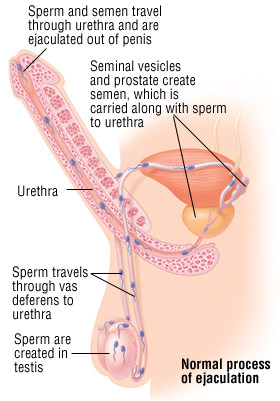
Premature ejaculation occurs when a man reaches orgasm and ejaculates too quickly and without control. In other words, ejaculation occurs before a man wants it to happen. It may occur before or after beginning foreplay or intercourse. Some men experience a lot of personal distress because of this condition.

As many as one in five men experience difficulty with uncontrolled or early ejaculation at some point in life. When premature ejaculation happens so frequently that it interferes with the sexual pleasure of a man or his partner, it becomes a medical problem.

Several factors may contribute to premature ejaculation. Psychological problems such as stress, depression and other factors that affect mental and emotional health can aggravate this condition. However, there is growing evidence that biological factors can make some men more prone to experience premature ejaculation.

Rarely, premature ejaculation can be caused by a specific physical problem, such as inflammation of the prostate gland or a spinal cord problem.

Symptoms

The key symptoms of premature ejaculation include:

  • Ejaculation that routinely occurs with little sexual stimulation and with little control
  • Decreased sexual pleasure because of poor control over ejaculation
  • Feelings of guilt, embarrassment or frustration

Diagnosis

Premature ejaculation is diagnosed based on typical symptoms. To understand your problem, your doctor will need to discuss your sexual history with you. Be frank and open. The more your doctor knows, the better he or she can help you.

If your sexual history fails to reveal significant mental or emotional factors that may contribute to premature ejaculation, your doctor may want to examine you. Your doctor may examine your prostate or do neurological tests (tests of your nervous system) to determine if there is a physical problem that could be causing premature ejaculation.

Expected Duration

Sometimes, premature ejaculation goes away on its own over weeks or months. Working to relieve stress or other psychological issues may help the situation to improve.

Other men have lasting difficulties with premature ejaculation, and require professional help. Some men respond to treatment promptly, while others struggle with this problem over a prolonged period. Effective treatment is available.

Prevention

There is no known way to prevent premature ejaculation. However, you should consider the following advice:

  • Maintain a healthy attitude toward sex. If you experience feelings of anxiety, guilt or frustration about your sex life, consider seeking psychotherapy or sexual therapy.
  • Keep in mind that anyone can experience sexual problems. If you experience premature ejaculation, try not to blame yourself or feel inadequate. Try speaking openly with your partner to avoid miscommunication.

Treatment

Behavioral therapy is one possible approach for treating premature ejaculation. Most commonly, the “squeeze technique” is used. If a man senses that he is about to experience premature orgasm, he interrupts sexual relations. Then the man or his partner squeezes the shaft of his penis between a thumb and two fingers. The man or his partner applies light pressure just below the head of the penis for about 20 seconds, lets go, and then sexual relations can be resumed. The technique can be repeated as often as necessary. When this technique is successful, it enables the man to learn to delay ejaculation with the squeeze, and eventually, to gain control over ejaculation without the squeeze. Behavioral therapy helps 60% to 90% of men with premature ejaculation. However, it requires the cooperation of both partners. Also, premature ejaculation often returns, and additional behavioral therapy may be needed.

Another possible treatment is prescription medication that helps to delay ejaculation. Delayed orgasm is a common side effect of certain drugs, particularly those used to treat depression. This is true even for men who are not depressed. When this type of medication is given to men who experience premature ejaculation, it can help to postpone orgasm for up to several minutes. Drugs used for this type of treatment include selective serotonin reuptake inhibitors (SSRIs), such as fluoxetine (Prozac), paroxetine (Paxil) or sertraline (Zoloft); and tricyclic antidepressants, such as clomipramine (Anafranil).

Some men with premature ejaculation may benefit from drugs called phosphodiesterase inhibitors, such as sildenafil (Viagra), vardenafil (Levitra), and tadalafil (Cialis). A phosphodiesterase inhibitor can be used alone or in combination with an SSRI. One drug should be started at a time, preferably at a low dose.

Some men with premature ejaculation also benefit from reducing the stimulation they experience during sex. A number of creams are available that can partially anesthetize (numb) the penis and reduce the stimulation that leads to orgasm. Another option is to use one or more condoms. However, these techniques may interfere with the pleasure experienced during sex.

When To Call a Professional

Speak with your doctor if you consistently ejaculate before you want to. Remember, one instance of premature ejaculation does not mean that you have a condition that requires treatment. Your doctor may refer you to a sex therapist if premature ejaculation is causing major problems in your sex life or personal relationships or if you would like to consider behavioral therapy.

Prognosis

Many men experience a brief period of premature ejaculation, then improve on their own. Even for men who require medical treatment, the outlook is usually good.