PUMPING SAFETY TIPS

Penile vacuum therapy, commonly referred to as “pumping,” is a method that involves using a device to create a vacuum around the penis, drawing blood into the organ and resulting in an erection. While effective for various purposes, including treating erectile dysfunction and enhancing size, it’s crucial to use the device safely to prevent potential injuries.

1. Choose the Right Type of Pump

Different types of penis pumps exist, such as air pumps and hydropumps. While air pumps use air to create the vacuum, they can sometimes cause the penis to bend, bruise, or blister. On the other hand, hydropumps use water, providing a safer experience as the warm water acts as a cushion during the pumping process.

2. Don’t Overpump

While it’s tempting to see immediate extreme outcomes, it’s essential to be patient and aim for long-term results. For pumps with gauges, it’s recommended the first session be at 3-5 Inches Hg maximum. Overpumping can lead to issues like a donut effect, blisters on the glans, petechiae, or other skin injuries, which can delay progress.

| Also read: The Eternal Debate: Pumping vs. Clamping for Penis Enlargement

3. Protect the Testicles

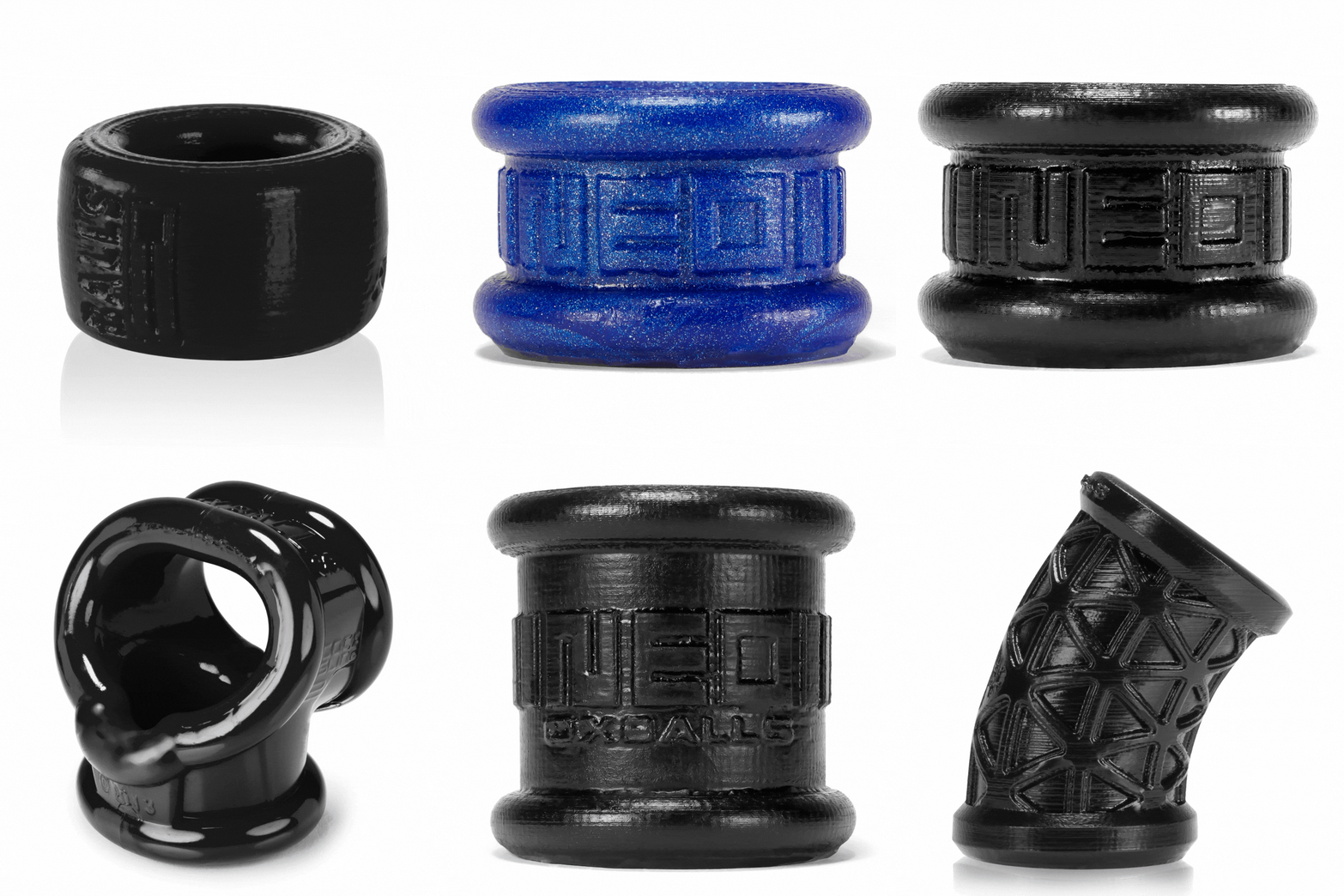
Sometimes, the pump can inadvertently suck in the testes. Using a ball stretcher can help prevent this from happening.

Ball Stretchers JELQ2GROW

4. Safety First

Ensure that the pump you’re using is of high quality. Counterfeit or low-quality pumps can lead to poor results and potential injuries. Always read the manufacturer’s instructions before use, ensure you have the correct size of the pump, and avoid using it under the influence of alcohol or drugs.

5. Be Aware of Skin Changes

Monitor your skin for any changes. If you notice bruising, redness, or blistering, stop using the pump. Small red dots indicate bleeding under the skin, and any numbness, discomfort, or pain is a sign of ceasing usage.

J2G ACADEMY

Interested in Jelqing, Stretching, or ULI’s? Join JELQ2GROW Academy for FREE today!

6. Hygiene Matters

Maintain hygiene by cleaning your pump with a specialized cleaning solution after every use to prevent bacterial buildup and potential infections.

7. Use JELQ2GROW’s Jelqing Balm

JELQ2GROW’s Jelqing Balm is designed to help men reconnect with their intimate parts and provide proper care for the delicate skin of the penis. The balm contains Shea Butter, Beeswax, and Tea Tree Oil, offering numerous skincare benefits:

JELQ2GROW Balm Penis Enlargement

– Moisturizing: Shea Butter’s fatty acid content provides hydration, locking in moisture and reducing the risk of dryness.

– Smoothness: Enhanced hydration improves skin recovery, leading to softer and healthier-looking skin.

– Nutritive: The balm is rich in vitamins A, E, and F, promoting strong antioxidant activity and protecting skin cells.

– Healing & Repair: Shea butter and Beeswax help reduce the appearance of stretch marks and scarring.

– Anti-inflammatory: Tea Tree Oil, with its high concentration of terpinen-4-ol, along with Shea butter, reduces inflammation.

Using the Jelqing Balm post-pumping can prevent injuries, boost recovery in case of irritation, and enhance the overall jelqing experience.

Penis Pumping: Maintenance for Long-Term Results

If you suddenly interrupt your training, pumping results won’t stick forever, a maintenance routine will help sustain the gains. Consider pumping every 7-10 days or twice a week. If you stop all forms of training, some of your gains might regress, but not all.

By adhering to these safety tips and incorporating quality products like JELQ2GROW’s Jelqing Balm, you can ensure a safe and effective pumping session. Always prioritize your health and well-being, and consult with a healthcare professional if you have any concerns.

Cryotherapy for pain relief possible substitute for opioids

ONLY ON 3: Omaha trauma surgeon finds cryotherapy as possible strategy to replace opioids

Patient undergoes cryotherapy for pain relief for rib fractures

By: Isabella Basco

Posted at 6:32 PM, Jun 06, 2022 and last updated 7:32 PM, Jun 06, 2022

This article is a repost which originally appeared on KMTV 3 News Now

Edited for content. The opinions expressed in this article may not reflect the opinions of this site’s editors, staff or members.

Our Takeaways:

· Cryotherapy can be used as an alternative to opioids for pain relief.

· There is evidence recovery from trauma can be greatly accelerated using cryotherapy.

· Negative side effects may be reduced by using cryotherapy in lieu of more traditional means of treating trauma.

OMAHA, Neb. (KMTV) — You could call Council Bluffs man Jim Berry an active man. He builds cars, loves drag racing and four-wheeling. But just a month ago, the four-wheeling went too far. An accident left him with several broken ribs.

“It felt like I had been pierced through my back and it would poke out here. So every movement was like the tip of the dagger moving back and forth and it was like digging in, like cut, cut, cut,” Berry said.

Initially, Berry was told he’d have to wait six to eight weeks to let his ribs heal naturally. But that didn’t work for his lifestyle or career, so CHI Health CUMC-Bergan Mercy Trauma Surgeon Dr. Carlos Fernandez decided to try something new.

“We wondered what else can we do? When the cryotherapy concept came about, it’s basically the freezing of the nerves using controlled temperature to cause a temporary and reversible damage to the nerve. It usually lasts two months and matches the healing time of rib fractures,” Fernandez said.

What happened after?

“No sharp pains, no ‘don’t do that’ pains really. But then again, I try to keep myself, I have no problems eating, moving,” Berry said.

“It was amazing for me to see how much he changed the next day,” Fernandez said.

CHI Health CUMC-Bergan Mercy is the first to prove the method works for rib fractures. Berry opted out of using prescription pain killers, a benefit Dr. Fernandez sees for other patients.

“This is one of the strategies to minimize exposure of patients to opioids. It’s a difficult puzzle and this is one of the answers to that puzzle, is how to battle and win the opioid pandemia,” Fernandez said.

Fernandez says he needs to do “randomized clinical trials” to confirm the findings. He hopes to expand the application of cryotherapy without surgery.


Strength Training: Recommended Amount and Advice

The Lift | Gabrielle Kassel

Strong Schedule: How Often Should You Strength Train? BOLD

Medically reviewed by Micky Lal, MA, CSCS,RYT — Written by Gabrielle Kassel on May 18, 2022

This article is a repost which originally appeared on GREATIST

Edited for content. The opinions expressed in this article may not reflect the opinions of this site’s editors, staff or members.

Our Takeaways:

· Strength training is an important part of maintaining health.

· It is recommended to train 3 days a week, though 4 to 5 days a week can offer more benefits.

· Compound movement provide more of a workout than isolation exercises.

This is a series where we break down simple fitness activities you can do anywhere — and not just do them, but do them right. With these helpful tips, you can take control of your exercise process at your pace.

Maybe you loathe lifting but have goals you wanna achieve. Maybe you’re worried you’re under- or overdoing it at the gym. Maybe your schedule is fuller than your Netflix queue.

Whatever your situation, you’re here because you want to know how often you need to do strength training to hit your goals.

Ahead, your answer.

The health benefits of strength training

Let’s get this out of the way first: Strength training zero days a week really isn’t an option. Even if you’re not interested in building a bulked-up trunk or hulk-like arms (no shade — to each fitness-er their own fitness goals), you should be strength training.

Why? Because the health benefits are LEGIT.

If you still need some convincing to get started, read on.

1. Stronger muscles, stronger heart

Whether you’re trying to run faster, hike a small mountain with a hot date, or dance for hours at the club later, strength training might just be the answer. Because yeppp, your aerobic fitness will benefit from some weight-room hangs.

Sure, lifting weights is known to build muscle and tone your physique. But, according to a 2013 research review, it can also increase your aerobic capacity — that is, it can help get blood, oxygen, and nutrients flowing to your muscles more efficiently.

In addition, strength training improves your lactic threshold.

“Lactic threshold is the amount of time it takes for your muscles to fatigue,” says Jordan Metzl, MD, a sports medicine physician and the author of Running Strong. Essentially, the higher your lactic threshold, the longer you can work out without getting tired. Go ahead and sign up for that race.

2. Injury prevention

Gaining strength also minimizes your chances of getting hurt. *Throws triumphant fist into the air*

“Strength training has been shown to increase bone density as well as increase the resilience of your tendons and ligaments,” explains Michael Boyle, a strength and conditioning coach and functional training expert in Boston. “So, not only are you simply able to lift more weight, but you’re also building resistance to injury.”

Strength training will strengthen your midline too. A strong midline = better balance. And better balance = reduced risk of falling and injuring yourself!

3. Can help with weight loss

Would your brain combust if you learned that you could hit your weight loss goals without stepping on a treadmill?

Welp, prepare for an explosion, because recent studies have shown that people who weight train can see fat and weight loss similar to those who spend the same amount of time doing cardio.

4. Improved mental health

Mental health is health! (If you read that punctuated by clap-hand emojis, you read it correctly.)

And guess what? Lifting things up and putting them back down is likely good for your mental well-being.

A 2013 study of 341 women found that participants who started strength training twice a week had better body image and began to enjoy physical activity more than before.

Also, in a small 2020 study in 24 adults, participants reported reduced anxiety symptoms after an 8-week resistance training program.

We need more and bigger studies to learn more about these mental health benefits, but the results so far are encouraging!

How often do I have to lift to reap these rewards?

The short answer: 3 days per week.

Talk to almost any gym rat or trainer and they’ll tell you that’s the recommended number of times you should get your hands on some weights.

And for good reason: “When you work out 3 days a week, you’re working out often enough that you’re able to really learn the skill of lifting,” says strength coach and registered dietitian Albert Matheny, director of ARENA Innovation Corp and co-founder of SoHo Strength Lab in NYC. (Yes it is a skill!)

“Working out 3 days a week also allows you to prioritize both intensity in your workouts and recovery when you’re not exercising,” he says.

To top it off, strength training 3 days a week still allows adequate space in your schedule for other types of workouts, should that appeal to you.

That said, 1 or 2 days a week will still get you benefits

Can’t make it to the weight room more than once or twice per week? That’s not bad at all!

Lifting just once a week is enough to get some benefit, according to trainers.

“I have clients who only strength train once or twice per week, and they still see some significant results in strength,” says Noam Tamir, founder of TS Fitness.

“Once per week is enough to see some results for beginners and is usually enough for more advanced athletes to maintain most of their current strength gains,” adds Matheny.

But Matheny emphasizes that if you have the option of working out 2 days a week instead of one, it’s a good idea to do that! “The difference between working out once per week and twice is significant.”

Learning new lifts will be much easier, too, if you’re going twice per week than if you’re only going once. Again, learning how to lift is half the battle for new(er) lifters.

If you’re lifting twice per week, you can bring your full oomph to each and every session. Assuming you don’t work out on 2 consecutive days, that means you’re maximizing intensity.

For people training for marathons or triathlons, adding anaerobic (strength) training 2 times per week may even be more optimal than adding more days of strength training, according to Tamir.

Why? “Because the added strength will give the body the tools it needs to handle the repetitive stress of movements like running, cycling, or swimming while still leaving time in your schedule to train,” Tamir says.

You might meet your goals faster if you work out 4 or 5 days a week

If your fitness goals are strength-specific, you may benefit from strength training more than 3 days per week.

“If you have a goal, like ‘be able to squat X within X months’ or ‘increase overall muscular hypertrophy,’ strength training more could help you reach that goal faster,” says Matheny.

However, if you’re strength training more than 2 days per week, you’re going to want to rethink what each of those workouts looks like.

“The typical rule of thumb for programming is that if you’re strength training 1 to 3 times per [week], each workout should have a full-body emphasis,” says strength and conditioning coach Jake Harcoff. “But if you’re training more frequently than that, it makes sense to start incorporating splits into your program.”

In practice, that looks like training legs on Monday, back and biceps on Tuesday, and so on.

Lifting 6 or 7 days per week is pushing it …

TBH, if you’re reading this, you probably don’t need to be lifting 6 times per week.

“Strength training 6 to 7 times per week should most likely be left to the most elite lifters and longtime resistance trainers,” says Harcoff.

According to Harcoff, if you’re an average gym-goer, you’d benefit from going to the gym that often only if:

you have only a short time to allocate to training (think: less than 30 minutes) each day
your overall volume from the days you’re working out is low

Training this often isn’t recommended because it doesn’t give your body enough time to recover between sessions. And, as Matheny puts it, “If you’re not recovering, you’re not actually getting stronger.”

The best ways to get stronger

Regardless of how often you exercise, some training rules can help you reach your goals.

Do at least *some* compound exercises

What do the deadlift, squat, clean, and press have in common? They’re all compound exercises.

Compound exercises work multiple muscle groups at once and therefore offer greater bang for your buck than isolation exercises.

To understand the distinction, consider the difference between a front squat and a biceps curl. While a front squat works your calves, hamstrings, quads, glutes, core, back, forearms, and chest, the biceps curl works only your biceps.

Especially for folks who are crunched for time, compound exercises are the way to go to maximize strength (and fat burn) gains.

Boyle’s recommendation: Squeeze a variety of compound exercises that target different muscle groups (both upper and lower body) into every session.

Make do with what you’ve got

Sure, your options may be expanded if you’ve got a barbell or kettlebell handy, but it is possible to get a full-body strength workout without equipment!

If you can’t get to a gym, Boyle recommends combining movements like push-ups, pull-ups, planks, lunges, and squats.

Metzl agrees, adding that burpees, as well as plyometric jump squats and arm walkouts to push-ups, can be a nice way to switch things up. “These moves ramp up your metabolic furnace for the day,” he says.

Lift more weight

“Keep in mind the size principle: The higher the resistance, the more muscle recruitment,” says Tamir.

Meaning, you shouldn’t be reaching for the 3- or 5-pounders if you can actually lift 10 or 12 pounds with good form. The more weight you can lift safely, the more gains you’ll see.

Warm up properly

No, this isn’t just lip service — warming up actually is important.

“A proper warmup is crucial before kicking off a high resistance, high intensity workout, especially if you’re sedentary the rest of the day,” Tamir says.

Track your post-training activities too

“Proper nutrition is still king when it comes to getting the results you want,” says Matheny.

And that includes what you eat right after your workout. “Eating healthy carbs post-workout will replenish your glycogen levels and help your muscles recover faster,” Tamir says.

More important is the window for consuming protein. To maximize protein synthesis, Matheny recommends having 20 or more grams of protein within an hour of working out.

Bottom line

As far as strength training is concerned, doing something is better than doing nothing. The recommended frequency is 3 days per week for good gains.

Hitting the weight rack or the mat once a week may not be enough to reach your loftier goals. But any workout you do in the weight room – along with proper nutrition and hydration – is still enough to increase your overall health and fitness level.

And if you prefer to hit the gym more often, as long as you’re recovering properly, have at it!


Cryotherapy 101: Explore This Innovative Body Treatment

Cryotherapy doesn’t just lower your body temp, it decreases inflammation, recovery time and so much more. Here’s everything you need to know about this innovative body treatment.

April 4, 2022 by Maddy Zollo Rusbosin

This article is a repost which originally appeared on Orlando Magazine

Edited for content.

Our Takeaways:

· Cryotherapy can reduce inflammation and improve recovery after training

· Extreme cold can act as a natural pain reliever

· Dry cryotherapy options exist as an alternative to ice baths

There are a lot of reasons to try cryotherapy: Maybe you’re looking to enhance your athletic performance. Maybe you’re constantly icing sore body parts. Maybe you’re desperately in need of more restorative sleep. Or maybe you’re just curious.

I, for one, fell in the latter category. I’ve always been willing to try the latest spa treatments, so when I heard about Orlando’s Athlete Recovery Room, I couldn’t wait to see what cryo was all about. Although, the only thing I knew was that it’s cold therapy — and as a native Floridian, being chilly isn’t necessarily something I enjoy.

“Luckily, it’s a dry cold. It’s like going into a walk-in freezer but one that’s even colder,” explains owner Althea Stearns. Stearns, an avid runner who’s completed 50 marathons across the world in ten years, began experimenting with cryotherapy to relieve her tired muscles. “I’d go to big cities and see recovery places, and I was like why don’t we have something like this in Orlando? I initially started doing it as a mobile thing and it happened into this,” she says.

In February 2020, she officially opened her studio’s doors on Corrine Drive. While there’s a range of available services like massage, infrared sauna sessions, compression therapy, and facials, cryotherapy is one of Athlete Recovery Room’s biggest draws. They use a MECOTEC CRYO:ONE tank which fully immerses the body and head with cold air and oxygen.

So, what exactly does a treatment do? As your body is exposed to the cold, it triggers a fight or flight response, causing the nervous system to have a parasympathetic reaction. “The extreme cold aids the body in producing norepinephrine (released predominantly from sympathetic nerve fibers), which acts like a natural pain reliever,” says Stearns. Additionally, the cold cues your body to release beta-endorphins, which are proteins primarily synthesized by the pituitary gland. “These endorphins play a significant role in the sleep cycle and pain management. Because endorphins act as sedatives, which helps aid in sleep,” she furthers. “The number one thing athletes need is sleep, because it’s when the human growth hormone is produced (which helps the body heal and recover from exercise). If you sleep better, then you can perform better.”

That’s why local athletes like baseball players, MMA fighters, and even student athletes (the studio offers special memberships for them) are constantly coming through the doors. “I felt sore a lot, so my dad brought me in to try it out,” says Camilia Jones, a local tenth grade volleyball player who visits the Athlete Recovery Room almost daily. “It’s made me feel a lot better — more relaxed, I notice a difference in soreness, and endurance-wise, I can go on a lot more.”

However, don’t feel like you need to be an athlete to reap the rewards. “The cold makes your blood vessels constrict which helps with inflammation itself,” says Stearns, which is why it’s an ideal treatment for sprains, chronic back pain, herniated discs, muscle soreness, and more. If you’re really looking to address certain areas, they have a targeted nozzle to direct the cold air to the desired spot. You can even do cryo facials to tighten pores and achieve a lit-from-within glow.

Before a cryotherapy session it’s imperative to properly prepare. For the best results, wear underwear inside the chamber along with the provided gloves, socks, and an ear-shielding headband (mine even had built in music speakers). Beforehand, someone takes your skin’s surface temperature twice, once on the back of your shoulder and once on the back of your calf. According to Stearns, you ideally want those numbers to drop twenty-five to thirty degrees for the best results.

The cryotherapy tank was -124 degrees when I entered a.k.a. it was chilly. Thankfully, it wasn’t a shocking cold like jumping into an ice bath. By the time the three minutes were up, my temperature dropped 25 degrees. Right on target. As I left, I experienced the post-cryo adrenaline rush I was told about (a much-needed boost of energy for someone with a toddler at home), but physically, I didn’t feel much different until the next morning. That’s when I woke up infinitely more rested, and I noticed that my aching back pain had subsided.

“One or two sessions are good for temporary relief of soreness, but multiple sessions help the body become a hormone, endorphin, enzyme and antioxidant making machine,” explains Stearns. “And studies have shown repeated Cryotherapy treatments of 10 or more sessions, will increase white blood cells and glutathione (antioxidant) and enzymes that prevent tissue damage.” With results like that, a few minutes of shivering is well worth it.


How I Use Biohacking to Overcome Burnout at Work

Work stress resulted in depression and led this entrepreneur to seek new solutions.

By Simon Lovell October 28, 2021

Opinions expressed by Entrepreneur contributors are their own.

This article is a repost which originally appeared on Entrepreneur

Edited for content

When you’ve spent so many days in front of the computer screen anxious, mentally exhausted and unable to focus on the work you love, you start to look for answers. 

My build-up to burnout at work started with low-level stress, which then increased to anxiety. I would stay up late at night, force myself into bed and then get interrupted sleep, causing me to be grumpy the next day.

Over time, this lack of self-control manifested in irritability, anger and a lack of confidence, increasing my use of cigarettes, alcohol and anything else to block me from feeling my emotions because I couldn’t handle them. I was in denial about what was happing in my personal relationships and constantly blamed the people around me without taking responsibility for my own mental health.

Eventually, this disconnection from my body led to self-doubt and social isolation. When people would invite me out, I would use two excuses: “I’m too tired” or “I’m too busy.” These were lies to protect me from being around people because I couldn’t handle the feelings that would come up when trying to connect with others. 

The final stage of this aggressive attack on my true self was pushing those closest to me away. Unable to understand myself, I started to question who I was as a man, confused about my identity and desperate for answers. I was not present; I was preoccupied with my overactive mind and self-judgment.

That’s when I turned to biohacking. 

Biohacking entails hitting a challenge or number of challenges from multiple angles until you come up with an optimum solution. Sometimes, this can be a very costly journey, as it was for me. I have invested over $250,000 to “sort myself out.” But I got the results I wanted, and once I did, I was determined to see if the process could help other people too. 

My clients, who are working in very demanding roles, need to be at their best, and when their burnout is causing pressure at home, that’s normally when I get the message to help. They don’t understand how their brain works and need a plan to get back into the zone.

Here’s what happens when I’m working specifically with someone who is successful and need to get him or her back on track within days.

Biohack No. 1: Supercharging meditation 

If you are going through a serious illness and are told by your doctor to go to the hospital for a five-day treatment that will preserve your ability to walk, you’re going to do it. Often, that’s not the case when meditation is the prescription. 

Many business owners are inconsistent with meditation because they don’t understand the significant impact that daily meditation at a certain time can have on reducing burnout and speeding up recovery. If you meditate for two days, then feel a little better and go back to your normal habits, you did little to rewire yourself or shift your consciousness — just like eating spinach twice will not make you lean (or Popeye). The brain requires strong and frequent action to forge “synaptic strength.” 

When I’m guiding my leaders through specific meditations (before they start work is key), it’s not just about the type of meditation: It’s about the consistency and actions that are taken afterward that also create a shift away from burnout. But variety is key in biohacking.

In the early stages, guided meditations are better for newcomers to meditation, especially entrepreneurs who have struggled in the past with being consistent. The mind wanders too much when there are simply sounds and music. If they are too “boring” for the ego early on, the impatient entrepreneur’s mind will sabotage the long-term benefits. It’s a trap so many fall into. I once did too. 

Biohack No. 2: Awareness elevation

Neuroscience teaches us that education alone isn’t enough to change us. The best example of this is courage (a key part of bouncing back from burnout). You don’t become a courageous person from reading about courage. However, someone can bring awareness to a part of your personality that you may not be aware of, and then you get the opportunity to take a different action. If you always give your friends advice and get frustrated with nothing changing, it’s likely because of this very principle. People have to want change badly enough to enact it. 

We can start to overcome burnout at work quickly when we get the right education and then act. When this happens over a sequence of days, this backs up the already shifted energy in the morning (via meditation), which acts as a baseline for conscious actions. Without this, the actions are less likely because energies such as fear are still active in the nervous system. The body needs to feel safe to take action, which is a major factor in continued procrastination. 

Biohack No. 3: Breaking the “stuck” cycle

When stress and disconnection build up to a level that robs others of our presence, we get caught in a repetitive cycle doing the same thing over and over again. This creates more frustration. When I’m guiding my clients back into flow, peace and ease in their business, to support the first two biohacks, I’m giving them specific micro-actions every day so that they alter what can become a mundane routine. 

This could be as simple as trying out a different coffee shop, but builds over time until that spark and variety of life is injected, and the mind also starts to shift from its “mind-set-point.” When you hear “change your mindset,” it’s really about changing your actions, which comes from a different energetic system. Then, when we feel good about what we just did or revisit what we once lost, we go back into business with that fire, happiness and love that were temporarily lost because of the disconnection between the mind and the heart.

These elements work on their own and together, much like a truly healthy smoothie; one ingredient can work well, but it’s better to shoot for the ideal blend that works together for optimum results, especially if you want to be back to your best.

If you’re reading this and feel compelled to take action, yet continue not to act, you’re training yourself to repeat the same inaction. Do something now. There is a window of opportunity that was just opened for you.

Written By
Simon Lovell
Entrepreneur Leadership Network Contributor

Simon Lovell’s clients hire him to develop their emotional superpowers for next-level success and happiness. He is the creator of the Super High-Performance Formula and author of ‘The Black Ball: Does Anybody Else Have A Secret?’

7 Benefits of Ice Bath: For Athletes, After Workout

Ice, Ice, Baby: 7 Cool Benefits of Taking an Ice Bath

Medically reviewed by Gregory Minnis, DPT, Physical Therapy — Written by Alysa Hullett on October 12, 2021

This article is a repost which originally appeared on GREATIST

Edited for content.

Hold the candles, magazine, and wine for another time. Plunging into arctic-cold water might not sound like the most relaxing experience — but an ice bath might be worth it for the health benefits.

Advocates say ice baths reduce muscle pain, soreness, and give your health a boost. Anti-ice bathers say it’s ineffective or even dangerous. So, does freezing yourself from head to toe really do your bod any good?

7 benefits of ice baths

While the science is mixed, ice baths might offer benefits like:

  1. ease achy muscles
  2. improve workout recovery
  3. reduce stress
  4. cool you down
  5. boost circulation
  6. support a healthy immune system
  7. boost your mood

FYI: Those with high blood pressure, cardiovascular disease, or diabetes (type 1 or 2) should prob avoid ice baths. Talk with your doc if you’re not sure.

Ice baths: A long, frigid history

Also called cold-water immersion (CWI) or cold hydrotherapy, lots of athletes and fit fam folks love ice baths. That means going for an icy dip in water that’s 50 to 59°F (10 to 15°C), especially after exercise, for about 10 to 15 mins.

People have been taking cold baths for centuries. The Spartans of ancient Greece were super into them, and Hippocrates used them to treat fevers, hemorrhages, and ulcers. (The more you know 💫.) In the past several decades, they’ve been used in U.S. military training and by pro athletes like Michael Phelps and LeBron James.

Despite loyal cold bathers, a small 2017 study found a chilly dip was just as effective as low intensity exercise for easing sore muscles. Keep in mind, the study was only conducted on nine men, so we need more research. But even pro-ice bath research isn’t 10/10 proven.

What about cryo?

Cold water immersion isn’t to be confused with cryotherapy, which is a lot more intense, involving temps below negative 200°F (93°C). 🥶

Yeah… that’s a whole other (arctic) beast, and one you def don’t want to try at home.

1. Eases achy muscles

There’s some evidence that cold water immersion reduces muscle soreness after exercise. Cold water may help ease pain by causing your blood vessels to constrict. This reduces blood flow to the area and reduces swelling.

In a small 2020 study, researchers found cold water immersion to benefit muscle recovery when volleyball players practiced it several times after training over 16 days. However, they didn’t find any noticeable results in a week’s time.

A small 2016 study also found athletes who soaked in cold water reported less muscle soreness after exercising than those who didn’t.

It could be that when it comes to getting icy, consistency is key.

2. May improve workout recovery

It’s no secret that ice baths have been used by athletes so they could train harder and faster.

Heads up, though: The doctor who helped popularize ice for exercise recovery in the 1970s has since retracted his claims. These days, he says it could even delay recovery. 🤯

Even though most peeps these days look to an ice pack to soothe a sore muscle, the research still remains inconclusive on whether it truly supports healing.

3. Reduces stress

Nail biters, rejoice: That icy chill just might help you chill out.

According to 2018 research, cold stimulation (specifically in the neck region) stimulates the vagus nerve, thereby lowering heart rate and potentially reducing stress.

In a 2014 review of hydrotherapy treatments, researchers concluded that cold exposure (like a cold compress or ice bath) can boost the capacity and function of your central nervous system (CNS). A functional CNS can help you sleep better and just feel better.

4. Cools you down

Surprise: Taking a cool bath cools you off — and much more effectively than other methods.

In a 2015 review of 19 studies, researchers concluded that contact with cold water cooled off overheated peeps twice as fast as otherwise. The trick? Immerse as much of your skin as possible.

Whether you just endured a killer workout or temps are getting dangerously high where you live, cooling off quickly can be vital in a range of situations.

5. Boosts circulation

Freezing baths just might make for a happy heart.

When you submerge in cold water, blood rushes to your vital organs. Your heart then needs to work harder, pushing blood through your vessels and giving your bod the vital oxygen and nutrients it needs.

Keep in mind that going on a 10-minute walk can give you a similar blood-circulatory boost. Really don’t want to walk it out? Try an ice bath instead.

6. Supports a healthy immune system

Okay, so “boosting” your immune system isn’t actually a thing — but you can help support a healthy one.

Cold baths might help you do just that. A 2016 study found that people who take cold showers (not baths, but hey, same idea) are almost 30 percent less likely to call in sick for work or school.

In a 2014 study, researchers concluded that people were able to positively impact their own immune response through cold water immersion, deep breathing, and meditation. When exposed to a bacterial infection, participants who used these techniques had fewer symptoms and produced a stronger anti-inflammatory response.

7. Gives your mood a boost

A cold bath (or shower) a day just might keep the blues away.

A 2014 review found cold showers to have an antidepressant effect. Researchers say this is due to the cold receptors sending a jolt of electrical impulses to the brain’s nerve endings, thereby improving mental state.

While more research might be needed to truly understand the link between depression and ice baths, a little ice in your life just might help your mood.

Time to dive in: How to take an ice bath

Ready to take the plunge? Here’s how to make the most of your ice bath.

  • Timing is everything. Sports trainers generally recommend hopping in the ice bath as soon as you can after your workout. That way, you can target your muscles while they’re still in the healing process.
  • Keep it cool (but not too cool). Try to keep your ice bath to a temp of about 50 to 59°F (10 to 15°C). It might not sound that cold, but you’ll def feel the chill. (Pro tip: Get a baby bath thermometer.)
  • Make it short and sweet. An ice bath is def not the time to test how pruned your fingers and toes can get. Aim to stay in no more than 10 to 15 minutes.

Staying safe in icy conditions

It’s possible to get hypothermia or frostbite from an ice bath, so don’t take the time limit lightly. Set a timer if you need and always pay attention to your bod’s unique needs.

If you notice your skin changing colors, it’s def time to hop out.

Wait, cool it: Who shouldn’t try an ice bath?

Are there any safety concerns for certain populations? Though ice baths can be potentially risky for everyone, some populations may be especially prone to negative effects. You should likely avoid ice bathing if you:

  • have type 1 or 2 diabetes
  • have a preexisting cardiovascular disease or high blood pressure
  • have another condition that impacts your ability to regulate body temperature or blood pressure

If you’re not sure if an ice bath is right for you, talk with your doc.

The takeaway

There’s some research that suggests ice baths can help promote muscle recovery and provide a number of health benefits like reducing stress and improving your mood. But the research is still a bit controversial and inconclusive.

Those with type 1 or 2 diabetes, preexisting cardiovascular disease, or high blood pressure should avoid ice baths. If you plan to take the plunge, stay safe by doing so for no more than 10 to 15 minutes and at a temp of no less than 50 to 59°F (10 to 15°C).