Does testicular cancer affect fertility?
Testicular Cancer Will Not Stop You From Experiencing Fatherhood: Tips From Fertility Expert Treatment of testicular cancer may affect hormone levels in men and cause infertility. So, it is advisable to consider consulting a fertility expert before you go for any treatment.
Written by Editorial Team | Updated : December 24, 2021 6:16 PM IST
This article is a repost which originally appeared on TheHealthSite
Edited for content
Cancer impacts the body physically and mentally in many ways. Treatment of cancer can also impact fertility among both men and women. While breast cancer and cervical cancer are common among women, men are affected by testicular cancer. With the correct treatment, testicular cancer can still be cured and, you may still have a chance to become a father.
What is testicular cancer?
Testicular cancer is a condition in which cancerous cells develop in testicles among men. In most cases, men only develop cancer in one testicle. However, in rare cases, both the testicles can be affected.
Symptoms of testicular cancer
- Heaviness in the scrotum
- Painless lump or swelling in either of the testicles
- Fluid in scrotum
- Dull pain in lower abdomen/groin
- Chest pain, phlegm, and breathlessness (in later stages)
Risk factors of testicular cancer
- Age: Testicular cancer mainly affects younger men between 15-35 years of age.
- Family history: If anyone in your family has a history of testicular cancer, you stand at a higher risk.
- Race: Testicular cancer is much more common among white and non-Hispanic men.
- Infertility: Infertile men are more likely to develop testicular cancer.
Does testicular cancer affect fertility?
Treatment of testicular cancer can affect hormone levels in men and cause infertility. If cancer develops only in one testicle, the other one works normally and releases enough testosterone to lead a healthy life. However, if both the testicles have to be removed, you will have to take testosterone in the form of monthly injections to maintain normal levels in the body. Therefore, removing one testicle does not usually cause infertility among men. However, chemotherapy can cause infertility for some time during and after the treatment. It may also cause permanent damage to fertility among a few men. Chemotherapy can also reduce your sex drive for some time. Usually, if there is one testicle left, men can conceive after cancer has been treated or two years after chemotherapy is finished.
What options do men have?
According to a study, most men who suffer from testicular cancer can conceive biologically. Sperm banking is a good option for men in case of infertility caused by testicular cancer. Even if your chances of getting infertile are low, your physician will advise you for sperm banking, if you wish to conceive later in life. Before any cancer treatment, you can store your sperms so that they are not damaged due to radiation or chemotherapy.
Sperm banking is also a great option for boys who have passed puberty and wish to conceive a few years later. Sperms can be stored for longer periods.
Also, orchidectomy or removing a testicle will not affect your chances of conceiving, until your other testicle is healthy.
Whether you have less or high chances of being infertile after treatment of testicular cancer, you should always consider consulting a fertility expert before you go for any treatment. A fertility specialist will suggest you options like using a donor sperm.
How to prevent testicular cancer?
Many of the known risk factors of testicular cancer cannot be prevented. Because of this, testicular cancer cannot be prevented. Also, most of the cases are found accidentally. Therefore, men should examine their testicles, starting from puberty. See what feels normal, especially after a shower and bath. Consult with your physician if you notice any signs and symptoms of testicular cancer.
The article is contributed by Dr Lavanya R, Fertility Specialist, Nova IVF Fertility, Whitefield, Bangalore.
Human sperm count dwindling, penis shrinking at alarming rate, scientist warns
This article is a repost which originally appeared on INQUIRER.net
Edited for content
Amid the many global problems we are facing today, one of humanity’s biggest issues comes relatively unnoticed: the decline in reproductive health, especially for males.
Specifically, the sperm count of males in the West has significantly decreased by 59% between 1973 and 2011 due to chemicals found in everyday items, a study co-authored by Dr. Shanna Swan in 2017 has found.
In the study, which has been making headlines around the globe, scientists noted that sperm count is of considerable public health importance for several reasons including the decline of male fertility and the rise of other health issues, such as testicular cancer.
“If you look at the curve on sperm count and project it forward—which is always risky—it reaches zero in 2045,” Swan said in her new book titled “Count Down: How Our Modern World Is Threatening Sperm Counts, Altering Male and Female Reproductive Development, and Imperiling the Future of the Human Race,” as cited by Axios on Feb. 24.
In the book, Swan also noted that aside from the decline in sperm count, penis size and testes volume have been decreasing among humans in the past few decades.
“The current state of reproductive affairs can’t continue much longer without threatening human survival,” Swan writes in the book.
Swan has since doubled down on her warning via Scientific American on March 16, where she co-wrote with Stacey Colino that the decline in reproductive health is happening to females as well.
They found that reproductive problems in males have been increasing by 1 percent every year, while the miscarriage rate for females in the United States is also increasing by 1 percent annually.
Swan and Colino noted that while 1 percent may not seem like a big number to the public, it actually is as this means a 10% increase every decade and a 50% increase in just 50 years.
This increase in reproductive health problems is faster than the rate of global warming, but the public has not been as vocal or informed regarding the issue, which threatens humanity’s existence.
Hormone-altering chemicals
This decline in reproductive health is largely due to the hormone-altering chemicals found in items found all around us: from plastic containers, food packaging, water bottles to electronic devices, pesticides and many others.
These items contain chemicals such as phthalates, bisphenol A and flame retardants, among others. It is no coincidence that the decline in reproductive health began in the mid-20th century when these items started being produced in large numbers, the researchers noted.
“Exposure to these chemicals is especially problematic during pregnancy because what happens during pregnancy doesn’t stay in pregnancy. Rather, an expectant mother’s exposure to toxic chemicals in the air she breathes, the water she drinks, the foods she eats and the products she slathers on her skin can enter her body (and hence the fetus) and influence her baby’s reproductive development,” Swan and Colino explained.
“This is particularly true early in pregnancy—in what’s called the reproductive programming window—and it’s especially true for male babies,” they added.
Among the many health issues, these chemicals’ effect on reproductive health has also been associated with premature death.
The researchers urge humanity “to shift our collective focus” and prioritize demanding the replacement of the said chemicals from our everyday items with chemicals that do not affect our hormones.
” It’s also time to establish better testing methods and regulatory actions so that only safe chemicals can enter the market and our bodies. In other words, we need to stop using each other and our unborn children as lab rats for EDC exposures,” Swan and Colino stressed.
“The health and the future of the human race really do depend on it,” they added. Ian Biong /ra
Men’s Health Month – Testicular health
Leigh Day
This article is a repost which originally appeared on LEXOLOGY
Edited for content
We have reached the end of Men’s Health Awareness Month and we are now heading towards our first Coronavirus Christmas. My November has been spent in lockdown, glued to the US election whilst growing a tashe for Movember, a month-long charity event set up to highlight and fundraise for men’s health causes that include mental health, suicide prevention, prostate cancer and testicular cancer.
Did you know that in the UK, men visit their GP on average half as many times as women? On top of this worrying statistic is the fact that we are currently stuck in a global pandemic that has no end in sight. In April 2020, NHS England found that four out of 10 people were not seeking help from their GP because they were afraid of being a burden during a pandemic.
Being a burden should never be a consideration for not visiting your GP if you are worried about your health, regardless of how big or small you perceive the problem to be. The sooner a problem is shared, the quicker it can be solved.
One area that is important for men not to ignore is testicular health. Testicles are responsible for the production of sperm and also testosterone so it is vital we look after them.
Problems with your testicles can start when you develop a lump or a swelling. Whilst both these are not usually caused by anything serious, you should always speak with a doctor and get them checked.
The longer a problem with your testicles is left untreated, the worse it can get. With some testicular problems, time is very much of the essence and if you don’t act fast, there can be serious consequences.
In my role as a healthcare solicitor at Leigh Day, I have come across three different types of testicular problems where early discovery and diagnosis is vital to having the best long-term outcome. It is important that we all know the early signs of these problems, so that we seek GP advice if we are worried.
Testicular Cancer
Testicular cancer is where a tumour forms on or inside one of the testicles. Typical symptoms of testicular cancer include:
- A painless swelling or lump in one of the testicles,
- A change in shape, texture, firmness or appearance of a testicle,
- A dull intermittent ache or pain or the feeling of heaviness in the scrotum.
Testicular cancer is the most commonly diagnosed cancer of men between the ages of 15 and 49 years old in the UK. It is also one of the most treatable types of cancer and it has a survival rate of above 95 per cent. However, if undiagnosed, the cancer can spread further than your testicles and become far more complicated to treat.
Testicular Torsion
Testicular torsion is when the testicle twists around the spermatic cord. When this happens, it cuts off the blood flow to the testicle. Symptoms of a testicular torsion include:
- A sudden, severe pain on one side of the scrotum,
- Swelling of the scrotum,
- Abdominal pain,
- Nausea and vomiting,
- A testicle that’s positioned higher than normal or at an unusual angle,
- Frequent urination,
- Fever
A testicular torsion can happen at any time – during exercise, sitting, standing or even sleeping. It is a medical emergency and should be treated within four to six hours of the onset of pain. If the blood supply is not restored quickly, it will cause the testicle to shrink and die.
Testicular Infection
Epididymitis is a testicular infection where the tube at the back of the testicle becomes painful and swollen. Symptoms of epididymitis include:
- A sudden or gradual pain in one or both testicles,
- The scrotum feeling warm, tender and swollen,
- A build-up of fluid around the testicle that feels like a lump or swelling
Whilst epididymitis can be treated easily with antibiotics, if it is ignored it can spread to the testicle and can lead to chronic testicular pain, the growth of an abscess, infertility and the loss of your testicle.
Examining yourself
It is important to examine your testicles once a month to check for any changes, swellings or lumps. The best time to do this is after you have taken a bath or shower by resting your testicles in the palm of your hand, and gently rolling each one between a finger and your thumb. For further information on examining yourself, please visit the Movember “guide to checking your nuts”. (https://www.bismillahrestaurant.com/)
If you find something strange, are experiencing swelling or sudden and unexplained pain in one or both of your testicles, don’t stew over whether it’s serious or not – get checked out by a doctor. The earlier a problem is diagnosed, the better the chance of successful treatment will be.
Conclusion
I understand that for some men, the idea of sitting and talking with a doctor about your testicles can be embarrassing, worrying or stressful. I also appreciate that whilst we are in a middle of a global pandemic, people want to avoid visiting the doctor. However, if there is a problem or you are worried about your testicles, go see a doctor and tell them what is worrying you.
The earlier the problem is diagnosed, the sooner treatment can be given and the better your chances will be of a full recovery will be.
Testicular Cancer’s High Cure Rate Eliminating Fear
Eliminating the Fear Factor
Testicular cancer’s high cure rates turn panic into promise
By Nancy Maes
This article is a repost which originally appeared on Chicago Health Online
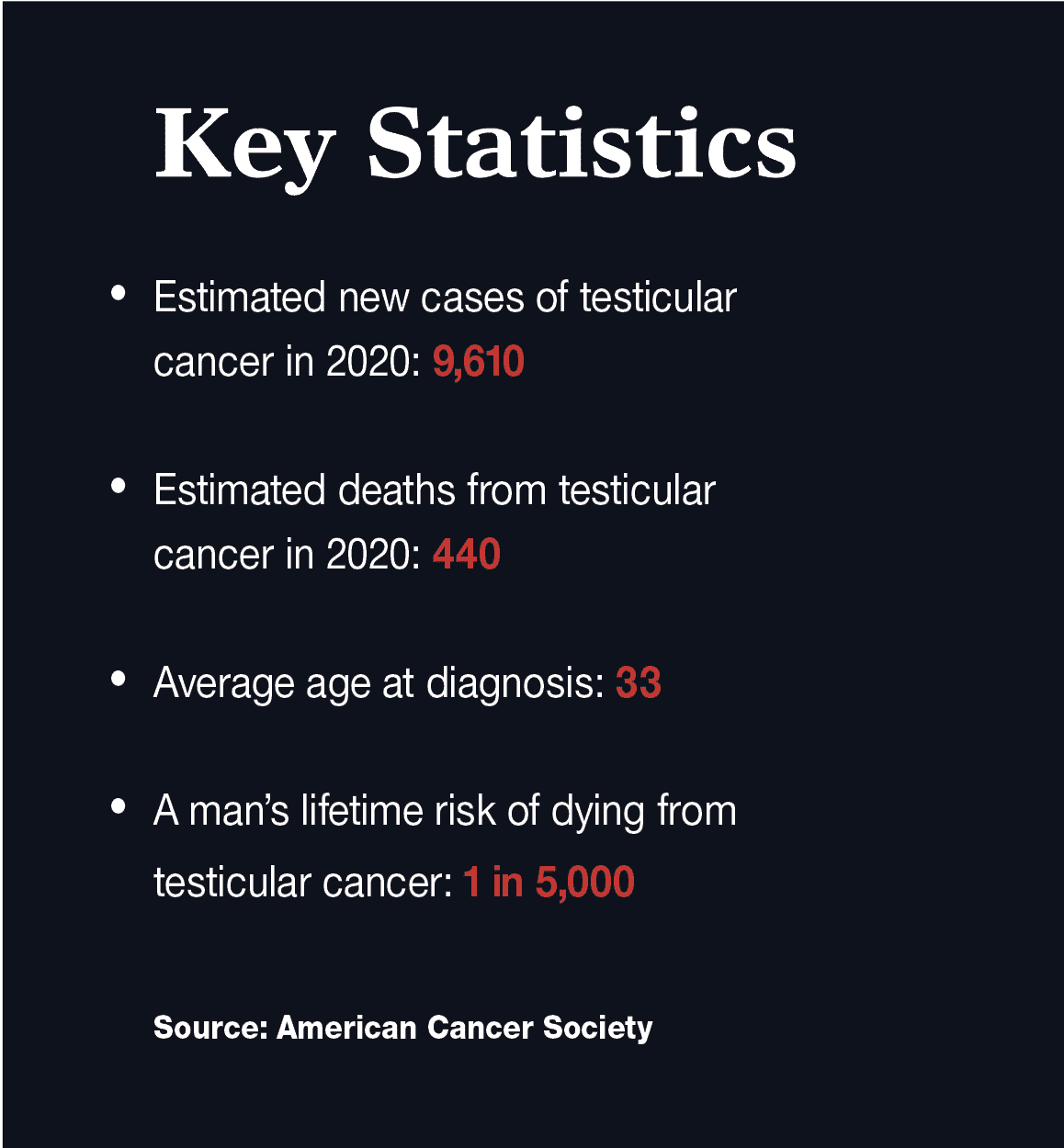
Testicular cancer rarely makes the headlines. Because so few men are diagnosed with the disease each year — the American Cancer Society puts the number of new cases at 9,610 annually — many men don’t pay attention to it. But they should. The earlier testicular cancer is detected, the easier it is to cure.
Cancer of the testicles — the organ that produces sperm and testosterone — typically affects young men. The average age at diagnosis is 33, according the American Cancer Society. But the age range is wide: About 6% of cases are found in children and teenagers and about 8% in men over age 55.
“We do know that this is a cancer that is most common between the ages of 15 and 35, but we don’t know why,” says Britt Hanson, DO, a hematologist/oncologist at NorthShore University HealthSystem.
Some notable cases affecting young athletes have made headlines. Figure skating fans will remember Olympic medalist Scott Hamilton, who returned to the sport after being treated for testicular cancer at age 38. And cyclists may recall that Lance Armstrong was diagnosed with stage 3 testicular cancer when he was 25 years old. After Armstrong successfully underwent treatment for the disease — which had spread to his abdomen, lungs and brain — he continued to compete and have more children.
Effective treatment
Fortunately, the disease is rarely fatal. A man’s lifetime risk of dying from testicular cancer is about 1 in 5,000, according to the American Cancer Society.
“The earlier the disease is diagnosed, the easier it is to treat,” Hanson says, “and even if it travels to the brain or the lungs, it is curable.”
Treatment is effective, says Michael McGuire, MD, a urologist at Northwestern Medicine. The five-year survival rate is 99% if the cancer hasn’t spread. “It is one of the greatest success stories in the history of medicine,” he says.
This is a disease that is emotionally scary. … But the reality is that we have the opportunity of getting [people] back to doing everything they did before treatment.”
While there are many forms of testicular cancer, more than 90% of cases are germ cell cancers that start in the cells that make sperm. Treatment depends on the stage, type and size of the cancer. Diagnosing the disease early opens up more treatment avenues, McGuire says.
“Earlier detection is important,” he says, “because it allows for more opportunity for options of treatment.”
Depending on the stage, physicians may recommend active surveillance to follow the individual regularly for any further signs of cancer. Usually, surgery is needed to remove the affected testicle.
And sometimes, doctors also remove lymph nodes in the abdomen to prevent future cancer. Chemotherapy is an option for a disease that has spread, McGuire says.
“We want to give men the best treatment with the least side effects,” McGuire says. “Sometimes we do chemotherapy, stem cell transplantation or immunotherapy for advanced disease, but most men don’t need anything that aggressive.”

Emotional impact
While men who have a testicle removed may be concerned about their ability to have children, McGuire says the cancer does not affect fertility in most men. Even if one testicle is removed, another functioning one remains.
If necessary, there are ways to retain fertility. “We have the opportunity to store sperm, and we have a specialist who can get sperm from a testicle with cancer in it,” McGuire says.
Testicular cancer, however, doesn’t only have a physical effect; there’s an emotional effect, too. “This is a disease that is emotionally scary,” McGuire says. “Young men seeing their mortality is a shock, especially when it involves losing a part of their genitalia. But the reality is that we have the opportunity of getting them back to doing everything they did before treatment.”
To catch testicular cancer early, McGuire recommends that every man conduct a self-exam each month after puberty for signs of the disease. “Any hard spot in the testicles should be seen by a doctor,” he says. The problem is, he adds, even after feeling a lump, many men wait six to eight months before they see a physician.
“There’s no reason to wait, because the vast majority of the lumps and bumps that men feel in their testicles are not testicular cancer,” McGuire says. “Nothing makes me happier than to say, ‘This isn’t cancer. You have nothing to worry about.’”
But seeking medical attention early is key to a proper diagnosis. And with the good prognosis for testicular cancer, it’s possible to eliminate the fear factor.

UK man who survived testicular cancer becomes father: Here’s how to do testicle self-exam
Unlike other cancers, testicular cancer is much more common in younger men. Doctors recommend regular testicle self-examination to identify testicular cancer at its earliest stage. Watch out for these warning signs and symptoms.
By: Longjam Dineshwori
This article is a repost which originally appeared on THE Health Site
In what could be called a miracle, a UK man who lost his right testicle to cancer recently became a father. Joseph Kelley Hook was diagnosed with testicular cancer in 2017, when he was 29. Joseph knew something was very wrong when started feeling agonising pain in his groin and his right testicle had tripled in size. After a long fight, he finally defeated the cancer and was declared all clear in January 2018. But he never thought he would be able to have kids as he had his right testicle removed, plus chemo is known to reduce fertility. [The testicles produce male sex hormones and sperm for reproduction].
But in March this year, Joseph became a father when his partner Rachel gave birth to their son Jacob. He had frozen his sperm in case the couple ever needed it for IVF. But amazingly, he and Rachel were able to conceive naturally and didn’t need IVF.
Doctors in the UK say that testicular cancer is the most commonly diagnosed form of cancer in young men in the country. Joseph felt lucky that his cancer was caught early because of which could beat the deadly disease. He suggests all men to check their testicles and go to a doctor if they see or feel any changes.
Testicular cancer: Causes and risk factors
Compared with other types of cancer, testicular cancer is rare. But unlike other cancers, it is much more common in younger men, particularly those between ages 15 and 35. Men in their 30s are said to be at highest risk. (https://www.fasecolda.com/) Usually, testicular cancer affects only one testicle.
Doctors are not clear about what causes testicular cancer in most cases. But they know that it occurs when healthy cells in a testicle become altered. Sometimes some cells may develop abnormalities and grow out of control. These accumulating cancer cells may form a mass in the testicle. Testicular cancers mostly begin in the germ cells — the cells in the testicles that produce immature sperm. But what causes these cells to become abnormal and develop into cancer is unclear.
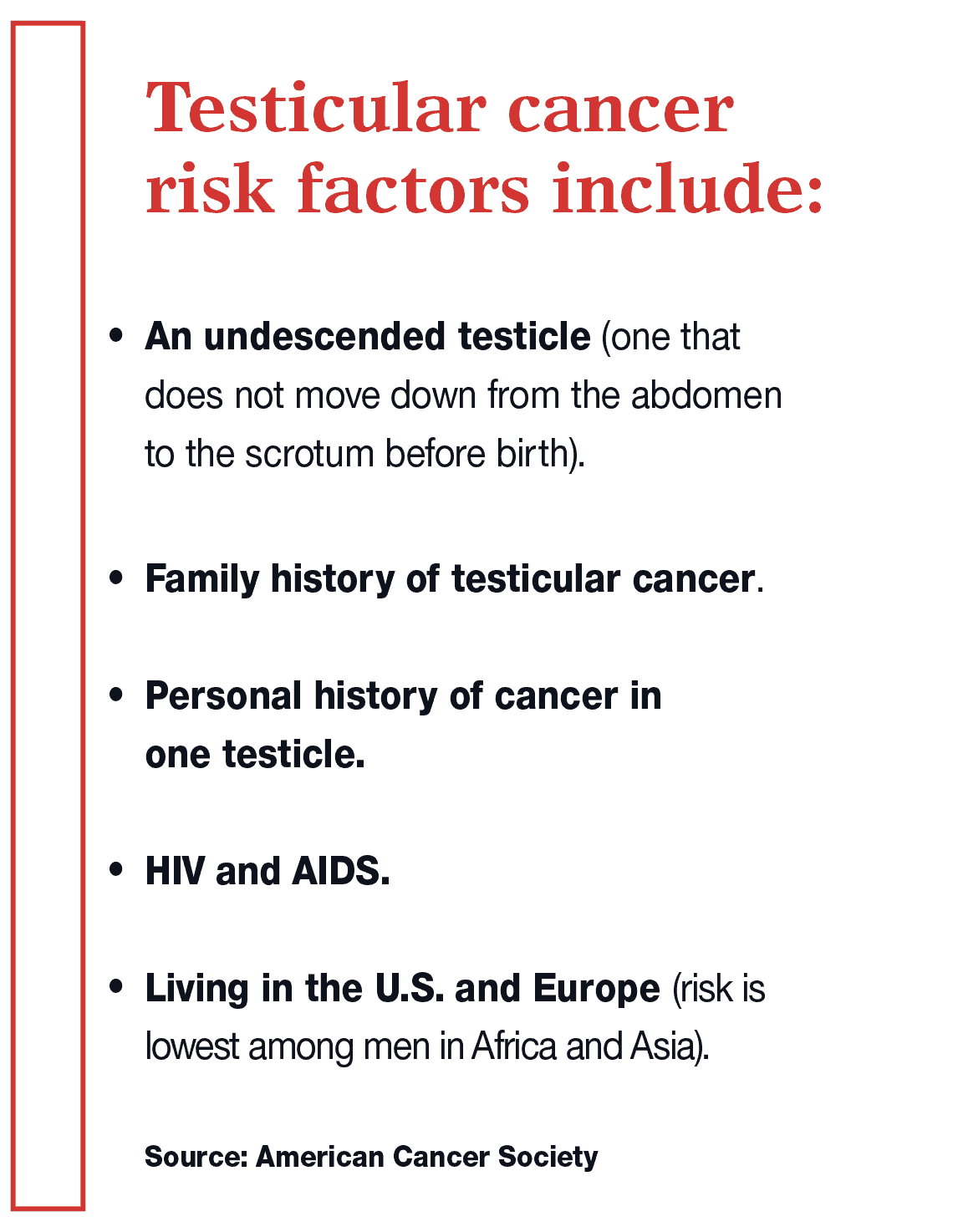
Factors that may increase your risk of testicular cancer include: An undescended testicle (cryptorchidism), abnormal testicle development, family history, age, and race. Testicular cancer is found to be more common in white men than in black men. Unfortunately, there’s no way to prevent this cancer from occurring.
Know the signs and symptoms of testicular cancer
In almost all diseases, early detection can lead to better treatment results and higher survival rate. Luckily, testicular cancer is highly treatable. The treatment will, however, depend on the type and stage of testicular cancer. Doctors also recommend regular testicle self-examination to identify testicular cancer at its earliest stage. So, watch out for these warning symptoms of testicular cancer to get it treated early.
- A lump or enlargement in either testicle
- Feeling of heaviness in the scrotum
- Dull ache in the abdomen or groin
- A sudden collection of fluid in the scrotum
- Pain or discomfort in a testicle or the scrotum
- Enlargement or tenderness of the breasts
- Back pain
If any pain, swelling or lumps in your testicles or groin last longer than two weeks, you need to see a doctor.
Testes: Anatomy and Function, Diagram, Conditions, and Health Tips
Medically reviewed by Alana Biggers, MD on May 29, 2018 — Written by Tim Jewell
This article is a repost which originally appeared on HealthLine
Edited for content
What are testes?
The testes — also called testicles — are two oval-shaped organs in the male reproductive system. They’re contained in a sac of skin called the scrotum. The scrotum hangs outside the body in the front of the pelvic region near the upper thighs.
Structures within the testes are important for the production and storage of sperm until they’re mature enough for ejaculation. The testes also produce a hormone called testosterone. This hormone is responsible for sex drive, fertility, and the development of muscle and bone mass.
Anatomy and function of testes
The main function of the testes is producing and storing sperm. They’re also crucial for creating testosterone and other male hormones called androgens.
Testes get their ovular shape from tissues known as lobules. Lobules are made up of coiled tubes surrounded by dense connective tissues.
Seminiferous tubules
Seminiferous tubules are coiled tubes that make up most of each testis. The cells and tissues in the tubules are responsible for spermatogenesis, which is the process of creating sperm.
These tubules are lined with a layer of tissue called the epithelium. This layer is made up of Sertoli cells that aid in the production of hormones that generate sperm. Among the Sertoli cells are spermatogenic cells that divide and become spermatozoa, or sperm cells.
The tissues next to the tubules are called Leydig cells. These cells produce male hormones, such as testosterone and other androgens.
Rete testis
After sperm is created in the seminiferous tubules, sperm cells travel toward the epididymis through the rete testis. The rete testis helps to mix sperm cells around in the fluid secreted by Sertoli cells. The body reabsorbs this fluid as sperm cells travel from the seminiferous tubules to the epididymis.
Before sperm can get to the epididymis, they can’t move. Millions of tiny projections in the rete testis, known as microvilli, help move sperm along to the efferent tubules.
Efferent ducts
The efferent ducts are a series of tubes that join the rete testis to the epididymis. The epididymis stores sperm cells until they’re mature and ready for ejaculation.
These ducts are lined with hair-like projections called cilia. Along with a layer of smooth muscle, cilia help move the sperm into the epididymis.
The efferent ducts also absorb most of the fluid that helps to move sperm cells. This results in a higher concentration of sperm in ejaculate fluid.
Tunica: Vasculosa, albuginea, and vaginalis
The testes are surrounded by several layers of tissue. They are the:
- tunica vasculosa
- tunica albuginea
- tunica vaginalis
Tunica vasculosa is the first thin layer of blood vessels. This layer shields the tubular interior of each testicle from further layers of tissue around the outer testicle.
The next layer is called the tunica albuginea. It’s a thick, protective layer made of densely packed fibers that further protect the testes.
The outermost layers of tissue are called the tunica vaginalis. The tunica vaginalis consists of three layers:
- Visceral layer. This layer surrounds the tunica albuginea that shields the seminiferous tubules.
- Cavum vaginale. This layer is an empty space between the visceral layer and the outermost layer of the tunica vaginalis.
- Parietal layer. This layer is the outermost protective layer that surrounds almost the entire testicular structure.
What conditions affect the testes?
Many conditions can affect the testes. Here’s a list of some of the most common ones.
Hydrocele
A hydrocele happens when excess fluid builds up in the cavities around one of your testicles. This is sometimes present at birth, but it can also result from an injury or inflammation.
Hydrocele symptoms include:
- testicular swelling that gets more noticeable as the day goes on
- a dull ache in your scrotum
- feeling heaviness in your scrotum
Hydroceles usually don’t require treatment unless they’re very large or painful. Most go away on their own, but more severe cases might require surgical removal.
Testicular torsion
Testicular torsion means that your testicle has rotated in the scrotum. This can wind up the spermatic cord, cutting off blood supply, nerve function, and sperm transport to your scrotum.
Symptoms of testicular torsion include:
- severe scrotum pain
- swelling of the testicle
- lower abdominal pain
- feeling nauseous
- vomiting
- feeling like the testicle is out of place
- urinating more than usual
Several things can cause testicular torsion, including:
- injury to the scrotum
- exercising too long or hard
- being exposed to cold temperatures
- free movement of the testicle in the scrotum caused by a genetic condition
Your doctor can treat testicular torsion by moving the testicle by hand. Some cases might require surgery to untwist the spermatic cord.
Orchitis
Orchitis refers to a swollen or inflamed testicle. Like epididymitis, orchitis often results from an infection caused by an STI.
Orchitis symptoms include:
- testicular pain and tenderness
- a swollen testicle
- fever
- feeling nauseous
- vomiting
Both bacterial and viral infections can cause orchitis. A combination of antibiotics or antiviral medication, along with nonsteroidal anti-inflammatory drugs or cold packs can help reduce discomfort and pain. Orchitis usually disappears in 7-10 days.
Hypogonadism
Hypogonadism happens when your body doesn’t make enough testosterone. It can result from a testicular issue or because your brain doesn’t properly stimulate hormone production.
You can be born with this condition. It can also happen due to an injury, infection, or other condition that affects testosterone production.
Symptoms of hypogonadism vary depending on age:
- In infants. The genitals might not be clearly male, or both sets of genitals might be present.
- In teenagers. Symptoms may include:
- a lack of muscle development
- little body hair growth
- no voice deepening
- unusual arm and leg growth relative to the rest of the body
- In adults. Symptoms may include:
- a lack of fertility
- loss of body hair
- growth of breast tissue
- loss of bone density
- an inability to get an erection
Hypogonadism is usually treated with hormone replacement therapy. It’s aimed at either the brain or testes, depending on the source of low testosterone production.
Testicular cancer
Testicular cancer happens when cancerous cells multiply within the tissue of your testicles. It commonly starts in the tubular testicle structures that help produce sperm.
The cause of testicular cancer isn’t always clear.
Symptoms of testicular cancer can include:
- a lump in your testicle
- feeling heaviness in your scrotum
- fluids in your scrotum
- testicular pain
- abdominal or back pain
- swollen or tender breast tissue
Sometimes, your doctor can surgically remove the affected tissue. In other cases, you may need to have an entire testicle removed. Radiation therapy or chemotherapy can also help destroy cancer cells.
What are common symptoms of a testicular condition?
See your doctor if you notice any of the following symptoms in one or both of your testes:
- long-term pain that’s either dull or sharp
- swelling
- tenderness
- a sensation of heaviness
Other symptoms of a problem with the testes include:
- feeling sick
- throwing up
- abnormal abdominal or back pain
- having to pee frequently
- abnormal growth of breast tissue
Tips for healthy testes
Try the following to keep your scrotum in good health:
Do a monthly testicular self-exam
Roll each testicle around in your scrotum using your fingers. Check for lumps and swollen or tender areas.
Bathe regularly
Take a shower or bath every day to keep your entire genital area clean. This reduces your risk of infections that can cause other complications. Keep your penis and scrotal area dry after bathing. Moisture trapped in the area can quickly become a breeding ground for bacteria.
Wear loose, comfortable clothing
Try to avoid wearing tight underwear and pants. Allow your scrotum to hang naturally from your body to help keep the scrotal temperature low and prevent injury.
Wear protection when you have sex
Wear a condom when doing any kind of sexual activity involving your penis. This helps to prevent sexually transmitted diseases that affect your scrotum and testicles.
- Garriga V, et al. (2009). US of the tunica vaginalis testis: Anatomic relationships and pathologic conditions. DOI:
10.1148/rg.297095040 - Ilio KY, et al. (1994). Structure and function of the ductuli efferentes: A review.
pdfs.semanticscholar.org/7eec/bc795850175d8cc4f1d1e911f4d3bb07d6cd.pdf - Jones O. (2018). The testes and epididymis.
teachmeanatomy.info/pelvis/the-male-reproductive-system/testes-epididymis/ - Mayo Clinic Staff. (2014). Orchitis.
mayoclinic.org/diseases-conditions/orchitis/diagnosis-treatment/drc-20375865 - Mayo Clinic Staff. (2016). Male hypogonadism.
mayoclinic.org/diseases-conditions/male-hypogonadism/symptoms-causes/syc-20354881 - Mayo Clinic Staff. (2018). Hydrocele.
mayoclinic.org/diseases-conditions/hydrocele/diagnosis-treatment/drc-20363971 - Mayo Clinic Staff. (2018). Testicular cancer.
mayoclinic.org/diseases-conditions/testicular-cancer-care/symptoms-causes/syc-20352986 - Mayo Clinic Staff. (2018). Testicular torsion.
mayoclinic.org/diseases-conditions/testicular-torsion/diagnosis-treatment/drc-20378274 - Rovito MJ, et al. (2015). “Off-label” usage of testicular self-examination (TSE): Benefits beyond cancer detection. DOI:
10.1177/1557988315584942 - Svechnikov K, et al. (2010). Origin, development and regulation of human Leydig cells.
karger.com/Article/FullText/277141 - Testicular disorders. (2014).
my.clevelandclinic.org/health/articles/9126-testicular-disorders - Testis. (2002).
instruction.cvhs.okstate.edu/Histology/HistologyReference/hrmalers.htm - What are testicles for? (n.d.).
goaskalice.columbia.edu/answered-questions/what-are-testicles - What should my testicles look and feel like? (2018).
nhs.uk/chq/Pages/878.aspx?CategoryID=61&SubCategoryID=618