

Penile melanosis: What to know
Penile melanosis is a rare condition that causes discolored areas of skin on the head and shaft of the penis.
This article is a repost which originally appeared on MedicalNewsToday
These patches are dark brown and may be slightly or significantly darker than the surrounding skin on the penis.
Penile melanosis does not cause any other symptoms. The condition is not infectious or contagious, and there is no way to pass it on to other people. However, the exact cause is still unknown.
Penile melanosis is generally harmless and does not require treatment. Some people may choose to have cosmetic procedures to remove the spots, though.
In this article, learn more about penile melanosis, including the causes, associated conditions, and treatment options.
Penile melanosis refers to patches of brown or dark brown skin on the penis. These spots are typically large and flat, with each one appearing alone.
Melanin is one of the main pigments in the skin, and people with more melanin have a darker skin tone. Melanosis refers to a buildup of melanin.
Penile melanosis may also involve other pigment compounds in the skin, such as:
- hemosiderin
- lipofuscin
- ferrous sulfate
As these pigment compounds build up, they can cause a noticeable change in the skin’s color. This hyperpigmentation appears in patches on the penis, rather than affecting the entire penis.
Doctors are not sure why some people develop penile melanosis. It is simply a buildup of pigment cells within the skin, which can occur in other locations as well.
However, possible risk factors that may increase a person’s chances of developing penile melanosis include:
- Age: While penile melanosis can affect people of any age, it mostly appears between the ages of 15 and 72 years.
- Genetics: There may be a genetic component to penile melanosis.
- Injuries: Previous injury to the penis may play a role, as the formation of scar tissue can lead to hyperpigmentation.
- Certain skin treatments: Treatment with certain drugs, such as anthralin or PUVA therapy, may increase the risk of penile melanosis.
Penile melanosis and lichen sclerosus
Penile melanosis may also have a link to another uncommon skin condition called lichen sclerosus.
Lichen sclerosus causes thin, pale patches of skin, usually in the genitals or hands. A 2017 case studyTrusted Source of an older man found an association between the penile melanosis and lichen sclerosus on his penis.
However, this does not mean that one of these conditions causes the other. It simply suggests that there may be a link between them.
Penile melanosis and cancer
Some people may worry that discolorations such as these will lead to melanoma, a form of skin cancer. Penile melanoma is very rare.
Penile melanoma may cause darker spots of skin similar to those of penile melanosis, but typically just on the head of the penis. These may grow, change color, and bleed.
When a doctor diagnoses penile melanosis, they will be sure to rule out the possibility of the lesions being cancerous. Therefore, once they have confirmed their diagnosis, this means that the lesions are not putting the person at risk of cancer.
A person may see a dermatologist at set intervals to monitor the condition and ensure that there are no signs of melanoma. There is no direct evidence that penile melanosis will lead to cancer, however.
As penile melanosis is a simple buildup of pigment cells in the skin, it does not require any treatment.
However, if a person feels that the pigment on the skin makes the penis unsightly or makes their sexual partners uncomfortable, there are cosmetic treatment options available. In many cases, it is possible to remove the patches of pigmented skin.
Laser therapy may help remove pigmented skin lesions or reduce their appearance. As a cosmetic procedure, laser therapy can also remove sunspots, scars, or even pigment from tattoos.
This process can take time, and a person will often need multiple sessions to remove the pigment. In some cases, the pigmentation will not go away completely but will get significantly fainter.
Some people may wish to have surgery to remove the spots. Surgery for penile melanosis involves removing the skin with the pigment and grafting new skin to the area.
Healing after surgery takes time. The surgery may also leave small scars, which can be unsightly if the person is worried about the appearance of their penis.
Removal procedures are only skin deep, and they should not affect a person’s sexual health or their ability to urinate.
Summary
Penile melanosis is a harmless condition. It occurs due to a buildup of pigment in the skin, which forms small dark lesions on the penis.
As this is the only symptom, the condition does not require treatment. However, some people still opt for removing the lesions or lightening them to reduce their appearance.
Anyone who does go through treatment to remove the lesions should not notice any changes in the function of their penis or their sexual health.
Discoloration on the penis can occur as a result of various causes, so anyone who notices any lesions or other changes should talk to a doctor or dermatologist for a diagnosis.

 I’ll admit, I’m not the best about immediately seeking medical care when I notice something isn’t quite right. But, Neil Walker’s story about how a “harmless rash” actually turned out to be penile cancer is definitely a cautionary tale about the importance of getting to a doctor as quickly as possible. The spread of penis cancer eventually led to the amputation of his penis.
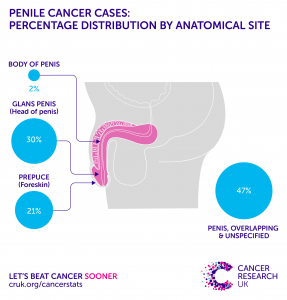 Cancer of the penis (penile cancer) is probably one of the least talked about cancer types, but can be just as deadly as other cancers. For this reason, like with all cancers, the sooner you get to a doctor and start treatment, the better. Let’s look at six symptoms you should pay attention to, because they may be warning signs of penile cancer.
 .
. .
. .
. .
.