Hitting the Books: Ray Kurzweil on humanity’s nanobot-filled future

Ray Kurzweil on Nanobots

Nanobots with AI brains may help humans live disease-free lives.

This was originally published in Engadget by Martin Ford. This is a repost on author Ray Kurzweil. See the original post here.

Architects of Intelligence

by Martin Ford

Artificial intelligence is the technology of tomorrow made manifest today. Thinking machines hold the promise of revolutionizing modern society from transportation and telecommunications to medicine and life sciences. But for all its upsides, AI has the potential to upend economies, disrupt job markets and incur unanticipated consequences at all levels of society.

In his new book, Architects of Intelligence: The Truth about AI from the People Building It, author Martin Ford interviews 23 tech luminaries and thought leaders in AI development to discuss the benefits and pitfalls the technology poses for the industry, the economy and society as a whole.

In the excerpt below, Ford sits down with Ray Kurzweil — Director of Engineering at Google — to discuss how AI-driven nanobots may one day help humans live radically longer, disease-free lives and hardwire augmented reality tech directly into our brains.

***

MARTIN FORD: You’re also well known for your thoughts on using technology to expand and extend human life. Could you let me know more about that?

RAY KURZWEIL: One thesis of mine is that we’re going to merge with the intelligent technology that we are creating. The scenario that I have is that we will send medical nanorobots into our bloodstream. One application of these medical nanorobots will be to extend our immune systems. That’s what I call the third bridge to radical life extension. The first bridge is what we can do now, and bridge two is the perfecting of biotechnology and reprogramming the software of life. Bridge three constitutes these medical nanorobots to perfect the immune system. These robots will also go into the brain and provide virtual and augmented reality from within the nervous system rather than from devices attached to the outside of our bodies. The most important application of the medical nanorobots is that we will connect the top layers of our neocortex to synthetic neocortex in the cloud.

Ray Kurzweil
AUSTIN, TX – MARCH 13: Author Ray Kurzweil at ‘Ray and Amy Kurzweil on Collaboration and the Future ‘ during 2017 SXSW Conference and Festivals at Austin Convention Center on March 13, 2017 in Austin, Texas. (Photo by Katrina Barber/Getty Images for SXSW)

MARTIN FORD: Is this something that you’re working on at Google?

RAY KURZWEIL: The projects I have done with my team here at Google use what I would call crude simulations of the neocortex. We don’t have a perfect understanding of the neocortex yet, but we’re approximating it with the knowledge we have now. We are able to do interesting applications with language now, but by the early 2030s we’ll have very good simulations of the neocortex.

Just as your phone makes itself a million times smarter by accessing the cloud, we will do that directly from our brain. It’s something that we already do through our smartphones, even though they’re not inside our bodies and brains, which I think is an arbitrary distinction. We use our fingers and our eyes and ears, but they are nonetheless brain extenders. In the future, we’ll be able to do that directly from our brains, but not just to perform tasks like search and language translation directly from our brains, but to actually connect the top layers of our neocortex to synthetic neocortex in the cloud.

Two million years ago, we didn’t have these large foreheads, but as we evolved we got bigger enclosure to accommodate more neocortex. What did we do with that? We put it at the top of the neocortical hierarchy. We were already doing a very good job at being primates, and now we were able to think at an even more abstract level.

That was the enabling factor for us to invent technology, science, language, and music. Every human culture we’ve discovered has music, but no primate culture has music. Now that was a one-shot deal, we couldn’t keep growing the enclosure because birth would have become impossible. This neocortical expansion two million years ago actually made birth pretty difficult as it was.

This new extension in the 2030s to our neocortex will not be a one-shot deal. Even as we speak, the cloud is doubling in power every year. It’s not limited by a fixed enclosure, so the non-biological portion of our thinking will continue to grow. If we do the math, we will multiply our intelligence a billion-fold by 2045, and that’s such a profound transformation that it’s hard to see beyond that event horizon. So, we’ve borrowed this metaphor from physics of the event horizon and the difficulty of seeing beyond it.

Technologies such as Google Search and Talk to Books are at least a billion times faster than humans. It’s not at human levels of intelligence yet, but once we get to that point, AI will take advantage of the enormous speed advantage which already exists and an ongoing exponential increase in capacity and capability. So that’s the meaning of the singularity, it’s a soft take off but exponentials nonetheless become quite daunting. If you double something 30 times, you’re multiplying by a billion.
Sample of DNA being pipetted into a petri dish over genetic results

MARTIN FORD: One of the areas where you’ve talked a lot about the singularity having an impact is in medicine and especially in the longevity of human life, and this is maybe one area where you’ve been criticized. I heard a presentation you gave at MIT last year where you said that within 10 years, most people might be able to achieve what you call “longevity escape velocity,” and you also said that you think you personally might have achieved that already? Do you really believe it could happen that soon?

RAY KURZWEIL: We’re now at a tipping point in terms of biotechnology. People look at medicine, and they assume it’s just going to plod along at the same hit or miss pace that they’ve been used to in the past. Medical research has essentially been hit or miss. Drug companies will go through a list of several thousand compounds to find something that has some impact, as opposed to actually understanding and systematically reprogramming the software of life.

It’s not just a metaphor to say that our genetic processes are software. It is a string of data, and it evolved in an era where it was not in the interest of the human species for each individual to live very long because there were limited resources such as food. We are transforming from an era of scarcity to an era of abundance. Every aspect of biology as an information process has doubled in power every year. For example, genetic sequencing has done that. The first genome cost US $1 billion, and now we’re close to $1000. But our ability to not only collect this raw object code of life but to understand it, to model it, to simulate it, and most importantly to reprogram it, is also doubling in power every year.

We’re now getting clinical applications—it’s a trickle today, but it’ll be a flood over the next decade. There are hundreds of profound interventions in process that are working their way through the regulatory pipeline. We can now fix a broken heart from a heart attack, that is rejuvenate a heart with a low ejection fraction after a heart attack using reprogrammed adult stem cells. We can grow organs and are installing them successfully in primates.

Immunotherapy is basically reprogramming the immune system. On its own, the immune system does not go against cancer because it did not evolve to go after diseases that tend to get us later on in life. We can actually reprogram it and turn it on to recognize cancer and treat it as a pathogen. This is a huge bright spot in cancer treatment, and there are remarkable trials where virtual every person in the trial goes from stage 4 terminal cancer to being in remission.

Medicine is going to be profoundly different in a decade from now. If you’re diligent, I believe you will be able to achieve longevity escape velocity, which means that we’ll be adding more time than is going by, not just to infant life expectancy but to your remaining life expectancy. It’s not a guarantee, because you can still be hit by the proverbial bus tomorrow, and life expectancy is actually a complicated statistical concept, but the sands of time will start running in rather than running out. In another decade further out, we’ll be able to reverse aging processes as well.

Excerpted with permission from Architects of Intelligence: The Truth about AI from the People Building It by Martin Ford. Published by Packt Publishing Ltd. Copyright (c) 2018. All rights reserved.

[product_categories number=”0″ parent=”0″]

How To Keep Your NAD Levels Elevated (Without IVs) For Staving Off Aging, Cellular Health, Full Body Repair & Much More.

Ben Greenfield Elevate NAD Levels

From pills to creams to meditations to exercises, it seems there is a multitude of oft-confusing ways to avoid aging out there. You may know I’m a bit inclined toward ensuring I research some of the more off-the-beaten-path methods of anti-aging and am happy to be the guinea pig who takes cold showers, does stem cell treatments, monitors my telomere length, and injects, swallows, and mainlines many different safe vitamins and well-researched anti-aging health supplements to see what works and what doesn’t. Of course, I also do incorporate many of the natural and free strategies I talk about here. 

Among the many things you may have seen me talk about in my quest against aging is NAD (Nicotinamide Adenine Dinucleotide) and experience with 8-hour IV drips of NAD and faster NAD push-IVs.

After all, when we talk about anything relating to aging, what we’re really talking about is cellular degeneration. Many of the signs of aging are often just the symptoms of a failing cellular mechanism or mitochondrial damage. And what do many cells need to operate at peak health? NAD. It’s crucial to many of the processes a cell carries out which benefit our bodies in numerous ways. This is why I believe increasing NAD in the body should be a top priority for anyone trying to support their health as they age. You’re about to discover why, and how to do just that.

The Signs Of Aging

There’s nothing like discovering your first gray hair or looking into the mirror and realizing even when you stop squinting the lines around your eyes stay put. The signs of aging are abundant, and yet you may not be noticing the less obvious warning signs that should be convincing you it’s time to take action to prevent the decline in health and body that occurs as you grow older. You may have already seen or are on the lookout for any of the following easy-to-notice physical signs of aging that can be determined even without the type of bloodwork I talk about here:  A Deep Dive Into How To Interpret The Results Of Your Blood Testing – Ben Greenfield Reveals & Walks You Through His Laboratory Results From WellnessFX.

[products ids=4510,4506]

  • Hair Loss/Thinning – More hairs going down the drain than usual during showers or finding more strands in your brush or on your clothes.
  • Hair Graying – Transition of hair color to either gray or white depending on your genetics.
  • Receding Hairline – Male-pattern baldness or thinning at the temples.
  • Turkey Neck/Sagging Skin – Loose skin you can gather between your fingers or even just the hooded eye skin drooping its way down your eyelid.
  • Sagging Breasts – Your bosom may simply not quite stand to attention the way it used to.
  • Sun Damage – This includes everything from spots on your hands, face, and shoulders to dryness and “leathery” skin.
  • Fine Lines And Wrinkles – Some of them become less “fine” than others and the grooves only get deeper as the years go by.
  • Bunions – From years of wearing the wrong footwear or walking irregularly due to injury, risk for these tend to increase with age.
  • Yellowing Teeth – Even if you lay off the coffee and wine, enamel depletes with age and your teeth show the signs of a weakened state.
  • Decreased Testosterone & Growth Hormones – Along with this comes decreased drive, sexual dysfunction, hot flashes, mood swings, and a host of other unwanted side effects.
  • Insomnia and Bad Sleep – Your circadian rhythms get thrown for a loop as you produce less melatonin.
  • Forgetfulness and Memory Loss – Not to be confused with Alzheimer’s, dementia or any major mental illness, but a decline in cellular energy means your brains have less cognitive power and begin making errors.
  • Weight Gain – Usually this has more to do with a lack of energy, a lowered metabolism, and bad diet, but finding it harder to lose or maintain weight is also part of aging.
  • General Fatigue – This is (in many people’s opinions) the worst symptom of aging and involves losing the energy to exercise, keep up a social life, and even do meaningful work (which just feeds into the myth that we become less capable as we get older).

Everything mentioned above is only the eventual outward symptoms of what’s happening inside our bodies at a cellular level. As you age, your cells decline in their ability to be able to resist stress and damage, resulting in a gradual loss of cellular function that leads to many of the physical issues listed above. So it stands to reason that if you can prevent cellular aging, you can prevent the signs of aging in general.

A molecule called NAD can help support cellular health. Even if it can’t solve every problem associated with aging, it’s worth learning more about.

What Is NAD?

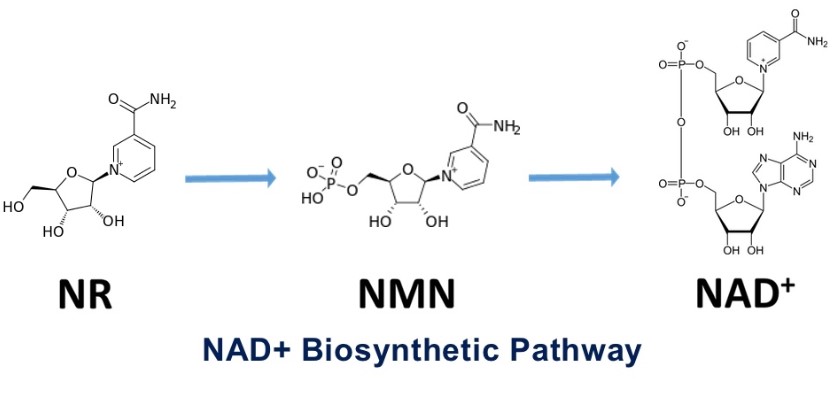
NAD biosynthetic pathway

Nicotinamide adenine dinucleotide, or NAD, is a coenzyme discovered over 100 years ago by scientists studying fermentation. NAD aids in the cell’s process of turning nutrients into the energy is necessary for metabolism. Your cells turn the energy stored in the food you eat into cellular energy (ATP). As part of the whole assembly line of operations that occur within a cell to get your organs to function, NAD is a crucial factory worker. If you appreciate your heart pumping, lungs breathing, muscles contracting, food digesting, etc. then you already have a healthy appreciation for NAD and the cellular energy it helps to produce.

The second role this molecule plays within our cells is to boost the activity of sirtuins, which are important proteins used by cells. When sirtuins are activated and doing their jobs, they support cellular maintenance and repair. Sirtuins have been implicated in influencing a wide range of cellular processes like aging, transcription, apoptosis, inflammation and stress resistance, as well as energy efficiency and alertness during low-calorie situations. Sirtuins can also control circadian clocks and mitochondrial biogenesis.

So your cells need NAD and your body is capable of creating it, but as you age, your cells take on a lot of stress and NAD is rapidly consumed as the cells cope. Metabolic stresses such as overeating and consuming alcohol can contribute even further to the depletion of NAD. Worse still, NAD decreases as we get older – a 60-year-old is likely to have half the count of NAD that they did at 40.

So now you’re probably wondering what’s the best way to get more NAD, aside from the costly IVs I’ve spoken of already, and discuss in detail in my last two podcasts with Tom Ingoglia here and here, and also in my recent podcast with Dr. Craig Koniver here.

Preclinical research shows that exercising and calorie restriction can both aid in upping NAD levels. These are two strategies I already advocate for and just make sense as part of a holistic health regimen. However, one of the easiest ways to naturally increase NAD without an IV is via supplements, more specifically the B3 vitamins I discussed here in my podcast with Dr. Charles Brenner (but as you’ll discover later, not all B3s are created equal when it comes to producing NAD).

Through its essential role in cellular energy production, NAD contributes, in early cellular stages, to basically every bodily function we notice or don’t notice but appreciate subconsciously. Here are just a few ways our bodies use NAD each day:

  • Exercise Performance and Recovery – When we exercise, cells in our muscles go to work generating boatloads of cellular energy. NAD is crucial to this process. After a workout, NAD also helps restore muscles and aids in the work cells perform to build muscle. Our ability to recover from workouts, a thing that seems to get harder as we age, is reliant on NAD doing its job. And working out is essential to avoiding declining muscle mass, another common component of aging.
  • Processing Alcohol – NAD is required for both of the chemical reactions that detoxify alcohol in the liver. Drinking can lower the liver’s NAD resources as the liver processes the alcohol we’ve consumed. You may notice it takes less alcohol to induce a hangover as you get older or that a little alcohol goes a long way and it’s easier to get tipsy or outright drunk, even accidentally. Obviously, I recommend discretion when drinking and a healthy self-awareness of your limits, but also understanding how your cells help you to bounce back when you’ve had a bit too much comes in handy.
  • Skin and Sun Exposure – Skin is the largest organ of our bodies and thus requires a massive amount of cells and cellular regeneration to maintain. Your skin is exposed to quite a few stressors, the sun being our skin’s most bitter enemy if overexposure to UVA and UVB occurs. NAD activates certain proteins in skin cells to help signal when and where sun-related damage has occurred. It’s no coincidence wrinkles are among the earliest signs of aging. A wrinkle is basically a line of skin cells that have lost their ability to hold up the skin and have thus caved in. Interestingly, a recent preclinical study with mice linked the appearance of skin wrinkles directly to cellular mitochondrial health.
  • Circadian Rhythms – It isn’t just the earth that’s set on a very strict 24-hr schedule – your bodies also rely on daily rhythmic biological processes to keep you going. These circadian rhythms are integral to overall metabolism and health.  NAD aids in cells maintaining their daily rhythms by helping to regulate circadian clocks at the cellular level. When faced with the mass confusion of facing a time zone change or spending too much time in the dark, our cells work overtime keeping up those rhythms. As long as our cells keep up the pace, everything can readjust and get back on schedule. When we don’t, boy do we feel it.
  • Breathing & Oxidative Stress – There are sometimes ways we can give our hardworking cells a break. After all, you do have the option of giving up alcohol or getting more sleep to rejuvenate yourself. But one thing we can’t stop doing is breathing and delivering oxygen throughout our bodies. As this oxygen is consumed by cells, free radicals can be produced that lead to oxidative stress. And the air you breathe contains more than just oxygen. Other sources of free radicals include air pollutants, chemicals, cigarette smoke and other issues I discuss in my last comprehensive article on air pollution. Fortunately, NAD and its molecular cousin NADP can arm your cells to counteract this stress and mop up free radicals.

To figure out how to get more NAD into your cells, you must first understand how vitamin B3 contributes to NAD.

Understanding The Vitamin B3s

There are actually 8 different vitamins that make up the B vitamin complex, one of which is B3. B3 vitamins are precursors to NAD, meaning they are basically ingredients that your body uses to create more NAD through cellular chemical processes. But there are three forms of B3, and the newest one to be discovered, nicotinamide riboside (NR), is the one scientists are getting especially excited about.

The B3 most people are familiar with is niacin (nicotinic acid). Niacin is available in supplement form and is also ingested in food because it is found in eggs, yeast, fish, meat, milk, green vegetables, and cereal grains. Since the 1930s people have used niacin for treating pellagra, which is a B3 deficiency caused by a lack of diet variety. However, niacin has the very annoying side effect of skin flushing and can create a red, warm face, an overall feeling of body warmth and tingly fingers.

The second of the B3s is nicotinamide, also known as niacinamide. This one’s much like niacin, but minus the painful skin flushing and without the useful cholesterol-lowering capabilities. Although it’s an NAD precursor, it deactivates sirtuins, those very useful longevity genes I mentioned earlier.

Then there’s nicotinamide riboside (NR), the most recently discovered B3 and a unique B3 when it comes to producing NAD. I interviewed the man who discovered the pathway that converts NR to NAD, Dr. Charles Brenner, on my podcast and got the skinny on exactly why NR is the superior B3 vitamin and all the benefits that it produces by supporting healthy, well-functioning cells.

NR serves as an NAD precursor and also activates sirtuins to jump in and do their job. Plus, it doesn’t cause flushing. Trace amounts of NR are found in milk, but you’d have to drink a heck of a lot of it to get the benefits of NR and in my opinion, the calories and high amounts of dairy proteins aren’t worth it.

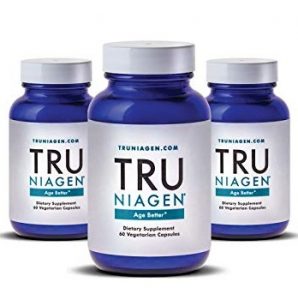
TRU NIAGEN, The NAD Superbooster

NAD True Niagen

If you listened to my podcast or read the transcript of my talk with Dr. Charles Brenner, you probably know a bit already about the supplement TRU NIAGEN, a B3 supplement in the form of NR. After Dr. Brenner discovered that cells can use NR as a precursor to NAD, interest in his work soared. Nutraceutical company ChromaDex licensed the patents for NR from Dartmouth College and asked Dr. Brenner to be their Chief Scientific Advisor.

Together they developed TRU NIAGEN, an NR supplement that has been clinically proven to increase NAD levels. By increasing NAD, TRU NIAGEN promotes cellular energy production. One capsule of TRU NIAGEN contains 150mg of the active ingredient NIAGEN nicotinamide riboside chloride, a patented and FDA safety-reviewed form of vitamin B3, as well as the inactive ingredients microcrystalline cellulose and hypromellose.

There have been over 150 scientific articles published around NR since 2004, many of them reflecting the positive effect NR has on NAD production. These include more than 100 preclinical studies published on the science behind NR and more than 20 human clinical trials published and ongoing. Specifically, the active ingredient in TRU NIAGEN, “NIAGEN nicotinamide riboside”, has been studied in four published human trials, which is more than any other NR supplement you’ll hear about.(See trials 123 & 4) From those trials, TRU NIAGEN has proven to safely and effectively increase NAD. NIAGEN has twice been successfully reviewed under FDA’s new dietary ingredient (NDI) notification program and has also been successfully notified to the FDA as generally recognized as safe (GRAS).

[products ids=4663]

Summary

Currently, I take 1-2 capsules NR TRU NIAGEN in the morning, then again in the afternoon (it works best when taken twice a day to support normal circadian rhythm). I still do the NAD IVs too, but I use the NR in between the IVs to maintain my levels as high as possible. I also take extra NR after drinking more than two glasses of alcohol, traveling across multiple time zones, or any time I’ve put excess stress on my body.

You can get NR from TRU NIAGEN, and for your convenience, below I’m including all posts and podcasts I’ve done about NR or NAD in the past should you want to take a deeper dive.

The Next Big Anti-Aging Drug: Everything You Need To Know About “NAD”.

How To Get Your Own Vitamin and NAD IVs, The Truth About Umbilical Stem Cells, Peptide Injections & Much More With Dr. Craig Koniver.

Advanced Muscle Building With Science: How To Biohack Body Composition With Stem Cells, NAD & One Workout Per Week.

The New Darling Supplement Of The Anti-Aging Industry (& The Truth About Whether It Actually Works)

Biohacking Alzheimer’s, Age Reversal, Young Blood, Stem Cells, Exosomes & More!

[products ids=4677,4674]

This was originally published in BenGreenfieldFitness.com. This is a repost. See the original post here.

[product_categories number=”0″ parent=”0″]

Is porn making young men impotent?

A male hand typing on laptop keyboard (Getty)

Is porn making young men impotent?

Up to a third of young men now experience erectile dysfunction. Some are turning to extreme measures such as penile implants – but is kicking their pornography habit the only solution?

By Amy Fleming of The Guardian

* This article is a repost which originally appeared on TheGuardian.com.

There is an ad campaign adorning the tunnels of the London Underground bearing the slogan “ED IS DEAD” next to a photograph of a wholesome-looking man in his prime. “Don’t worry,” it says in smaller writing beneath. “Ed’s not a guy. It’s a guy thing. It’s short for erectile dysfunction.” The posters are promoting a new brand of sildenafil (most commonly known as Viagra), which we are supposed to think is slaying the problem. But, as it stands, ED is far from dead.

Viagra’s core market used to be older men in poor health, but according to a number of studies and surveys, between 14% and 35% of young men experience ED. “It’s crazy but true,” says Mary Sharpe of the Reward Foundation, an educational charity focusing on love, sex and the internet. “Until 2002, the incidence of men under 40 with ED was around 2-3%. Since 2008, when free-streaming, high-definition porn became so readily available, it has steadily risen.”

To date, the main contributors highlighted by academic studies of ED are poor physical health – the effects of weight, for instance, and high alcohol, tobacco or drug use – and mental-health issues including stress, anxiety, exhaustion and importantly, depression.

But a body of opinion is emerging that frequent exposure to pornography could also be a factor; proponents believe clinical and anecdotal evidence is mounting that links compulsive pornography use and ED. Studies of this are not yet extensive and results are mixed with some finding no connection.

Clare Faulkner, a psychosexual and relationship therapist based in central London, has seen pornography use as a factor in some ED presentations. “I now have ED clients in their early 20s,” she says. Part of the problem with pornography is that it is “a very dissociated experience. Stimulation is coming externally, which can make it very hard to be in your body.” It also perpetuates the myth, she says, that “men are rock hard and women are ready for sex all the time”.

Lone viewers of pornography become accustomed to being fully in control of their sexual experience – which again, says Faulkner, “isn’t replicated in the real world”. Being faced with a real, complicated human being, with needs and insecurities, could be deeply off-putting.

In online forums dedicated to porn-induced erectile dysfunction (PIED), tens of thousands of young men share their struggles to stop using pornography, their progression from soft porn to hardcore and the barriers they face in forming real-life romantic and sexual relationships. It is hard to prove outright that pornography causes ED, but these testimonies replicate findings from the clinical literature: that if men can kick their porn habit, they start to recover their ability to become aroused by real-life intimacy.

Some young men have started their own support movements, such as NoFap (slang for “no masturbating”), founded in the US by Alexander Rhodes. (Sharpe observes that young men now “equate masturbation with pornography – they don’t see them separately”.) Rhodes, now 29, started using internet pornography at around 11 or 12. “I was in the first generation of people who grew up on high-speed internet porn,” he said in a recent online discussion.

By the time he started having sex at 19, he continued: “I couldn’t maintain an erection without imagining porn. High-speed internet porn was my sex education.” Last year, he told an audience at an event hosted by the US’s National Center on Sexual Exploitation: “Children of the United States and much of the developed world are being funnelled through an online experience where exposure to pornography is practically mandatory.”

The young age at which Rhodes started watching pornography is not unusual. In 2016-17, a Middlesex University study of children aged 11 to 16 found that 48% had seen pornography online. Of this group, the vast majority, 93%, had seen such material by age 14, with 60% of children having first watched it in their own homes. And an Irish study published earlier this year in the journal Porn Studies found that 52% of boys started using pornography for masturbation at the age of 13 or under. Social media can be a gateway, says Sharpe. “Porn stars have Instagram accounts so they’re getting kids to look at them on Instagram, and within their material they’ll say: ‘Look at my latest video.’ One or two clicks and you’re looking at hardcore porn. Kids of 12 or 13 aren’t supposed to be looking at hardcore adult material.”

The Reward Foundation isn’t an anti-pornography organisation, says Sharpe, “but excess porn is changing how children become sexually aroused”. And it is happening in their formative years, “at an age when they’re most vulnerable to mental health disorders and addictions. Most addictions and mental health disorders start in adolescence.” She and Faulkner believe that the rise in pornography use may at least partly explain why millennials are having less sex than the generation before them, according to a study published in the journal Archives of Sexual Behavior.

Gabe Deem, the founder of the pornography recovery group Reboot Nation, speaks openly about his own experiences. When he was 23, he said: “I tried to have sex with a beautiful girl, a woman I was extremely attracted to, and nothing happened. I couldn’t feel any physical arousal and couldn’t get the slightest bit of an erection.”

As with other addictions, says Faulkner: “People need stronger doses to get high. It’s always about pushing the boundaries to get the same excitement. Which means what they’re watching gets more hardcore and potentially frightening. I’ve had clients tell me they’re not comfortable with the material they’re watching.” When researchers study the brains of compulsive pornography users, says Sharpe: “They’re seeing the same brain changes that are common in all addictions.”

Some still dismiss the rise in ED among young men as performance anxiety, but Sharpe says while that may be true for some, “What we’re hearing from clinicians, sex therapists, doctors and people dealing with compulsive sexual behaviour is that more than 80% of issues are porn-related.” The Reward Foundation has been running workshops with healthcare practitioners across the UK and found that doctors and pharmacists don’t even consider asking their young male patients who have ED about their pornography use. “They’re giving them Viagra and that’s not working for many of them,” says Sharpe. “It’s not dealing with the underlying problem.”

When the drugs don’t work, Sharpe has heard of young men getting penile implants (prosthetics implanted in the penis to help erections). “One of the medical participants at one of our workshops last year said a patient had had two such implants.” No one had thought to ask him about pornography use.

On a recent school visit, Sharpe recalls, a teenage boy asked her how many times a day masturbating to porn was too many. “They’re using it all the time,” says Sharpe, “and nobody’s telling them it’s a problem.”

• This article was amended on 11 and 15 March 2019. A figure of 93% for 14-year-olds said to have seen pornography online was replaced with correct Middlesex University study findings. Elsewhere, Alexander Rhodes’ age was corrected to 29 from 31, and it was made clear that the National Center on Sexual Exploitation’s role in an event was to host it, not stage it in-house. Additional information was inserted noting the mixed findings of study results.